
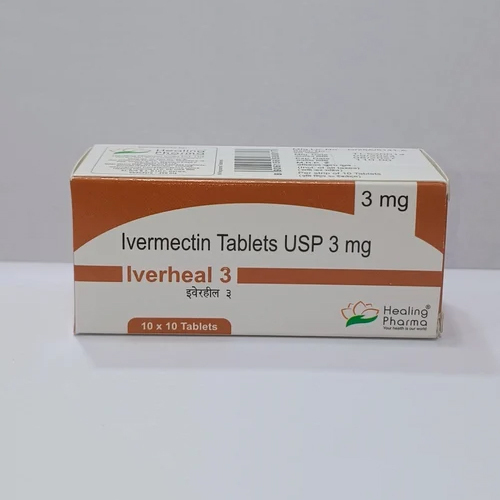
Description
Few tablets have a story as remarkable as the humble 3 mg ivermectin tablet. It began with a soil sample, grew into a veterinary success, became a human medicine and is now one of the most widely distributed drugs in public-health history. Ivermectin 3 mg is the smallest unit in our ivermectin range and the traditional building block for weight-based dosing. This guide tells that story and explains what the 3 mg strength means today, how community treatment programmes use it, what it is approved for and what safety rules apply.
Please note: ivermectin is a prescription medicine in most countries. It is not approved for the prevention or treatment of viral infections such as COVID-19, and regulators warn against veterinary ivermectin products. This page is educational, not medical advice.
Ivermectin 3 mg Overview
| Active ingredient | Ivermectin |
|---|---|
| Strength | 3 mg per tablet |
| Class | Macrocyclic lactone antiparasitic |
| Role in the range | Smallest unit and basic building block |
| Established uses | Intestinal strongyloidiasis; onchocerciasis; others by local guidance |
| Brand-name reference | Stromectol is a well-known 3 mg tablet brand in the United States |
| Companion strengths | 6 mg, 12 mg, 20 mg, 24 mg |
From Soil Sample to Essential Medicine: A Short History
The discovery
In the 1970s, Japanese microbiologist Satoshi Ōmura collected soil samples, including one from near a golf course in Japan, and isolated bacteria that produced interesting natural compounds. One strain, later named Streptomyces avermitilis, produced substances with striking activity against parasites. William Campbell and his colleagues at a pharmaceutical research laboratory in the United States tested the compounds and found that a derivative, ivermectin, was highly effective against many animal parasites. The two scientists later shared the 2015 Nobel Prize in Physiology or Medicine for this work.
From the farm to the clinic
Ivermectin became a veterinary mainstay in the early 1980s. Researchers then showed that it could also treat onchocerciasis, or river blindness, in people. In 1987 the manufacturer announced that it would donate the human formulation, known as Mectizan, for as long as needed to anyone who needed it for river blindness. That pledge led to one of the longest-running donation programmes in global health. A prescription tablet for strongyloidiasis followed in the United States in the mid-1990s.
Why it matters today
Many communities that once lived in fear of blindness from river blindness now receive annual treatment, and several countries have eliminated transmission in some areas. Ivermectin is also used in programmes against lymphatic filariasis and, in some regions, scabies.
What the 3 mg Strength Means
A 3 mg tablet contains three milligrams of ivermectin. Because dosing is tied to body weight, usually around 0.2 mg per kilogram for several indications, a 3 mg tablet corresponds to roughly 15 kg of body weight in a simple calculation. For heavier patients, several tablets are needed. A 60 kg adult would need four of these tablets at 0.2 mg per kg, for example, while a 120 kg adult would need eight. This is only an arithmetic illustration. Prescribers confirm the correct number using the product label and patient details.
| Approximate weight | Illustrative amount at 0.2 mg/kg | Number of 3 mg tablets in the arithmetic |
|---|---|---|
| 15 kg | 3 mg | 1 |
| 30 kg | 6 mg | 2 |
| 45 kg | 9 mg | 3 |
| 60 kg | 12 mg | 4 |
| 90 kg | 18 mg | 6 |
Higher strengths exist so that heavier patients can take fewer tablets. If you are comparing, the page for Ivermectin 12 mg shows how one tablet can replace four of these.
The most important safety rule
Always check the strength printed on the pack. Mixing up a 3 mg tablet with a 24 mg tablet could produce an eight-fold error. If you ever receive more than one strength, store them separately and label them clearly.
How Mass Drug Administration Uses Ivermectin
In community treatment programmes, health workers cannot weigh every person. Instead, they use height poles that match height to the number of tablets, based on the average relationship between height and weight. People then receive the corresponding number of 3 mg tablets. The approach is fast, safe at approved doses and suitable for huge populations. Typical features include:
- Annual or twice-yearly treatment campaigns.
- Community volunteers trained to deliver tablets.
- Screening for Loa loa in areas where it overlaps with river blindness.
- Exclusion of very young children, pregnant women in the first trimester and people who are severely ill.
- Monitoring for side effects and recording coverage.
The programmes show the drug’s safety record at scale, but they also remind us that individual treatment is different: a doctor can check weight, medicines and health status before prescribing.
How Ivermectin Works
Ivermectin binds to glutamate-gated chloride channels that exist in parasites’ nerve and muscle cells. Binding opens these channels, chloride rushes in, and the parasite becomes paralysed. Mammals do not have the same channels in their peripheral tissues, and a protective protein called P-glycoprotein limits the drug’s entry into the human brain. That selectivity gives ivermectin a wide margin of safety when used as approved.
By contrast, drugs such as albendazole and mebendazole starve worms by blocking tubulin. Read more in albendazole vs mebendazole.
What Ivermectin 3 mg Is Used For
Strongyloidiasis
Strongyloides can live in a person for decades. In someone who later takes steroids or becomes immune-suppressed, the infection can spread massively and be fatal. Treating it is therefore a priority, and ivermectin is the usual first-line drug.
Onchocerciasis
Ivermectin kills the larval worms that cause itching, skin changes and eye damage, though not the adult worms. Treatment is repeated so that new larvae are controlled over the adults’ lifespan.
Other uses
Depending on country and prescriber, ivermectin is also used for scabies, cutaneous larva migrans and some other nematode infections.
What It Is Not Used For
- Viral infections, including COVID-19.
- Cancer treatment or prevention.
- Tapeworm or fluke infections.
- General “detox” or parasite cleanses without a diagnosis.
The FDA’s consumer guidance explains why animal ivermectin should never be taken by people and why it is not authorised for COVID-19. See the external resources below.
Side Effects and Safety
Usually mild
- Dizziness, headache and tiredness
- Nausea, abdominal pain or diarrhoea
- Itching or rash
Reactions seen with filarial infections
When parasites die in onchocerciasis, the immune response can cause fever, itching, swollen glands, joint pain and low blood pressure. These effects occur within the first few days and are usually managed with supportive care.
Serious warnings
People who carry very high numbers of Loa loa can develop severe brain-related reactions after ivermectin. Anyone who has lived in central Africa should tell their doctor. Seek emergency help for confusion, seizures, loss of balance, severe rash or breathing difficulty.
Interactions and Precautions
- Warfarin: clotting should be monitored.
- CYP3A4 and P-glycoprotein inhibitors: may raise ivermectin levels.
- Enzyme inducers: may reduce levels.
- Pregnancy and breastfeeding: ask a clinician.
- Children under about 15 kg: standard tablets are generally not recommended.
To see how a related drug class handles these questions, read albendazole drug interactions and albendazole side effects.
How Long Does It Stay in the Body?
The half-life is about eighteen hours, and most of the drug is cleared through faeces within roughly a week. For a comparison with another antiparasitic, see how long albendazole stays in your system.
Counterfeits and Look-Alikes
Because ivermectin attracted public attention during the pandemic, poor-quality and mislabelled products entered some markets. Protect yourself by buying only from suppliers who show the strength, batch number, expiry date and leaflet, by checking that the tablet matches its description, and by never using animal formulations. If a pack looks suspicious, do not use it and tell your pharmacist.
Storage
Store tablets in the original container at room temperature, away from light and moisture. Keep them out of reach of children and animals. Do not use after the expiry date.
Inside a Community Treatment Day
It is worth imagining a typical treatment day in a river-blindness programme to understand how ivermectin works at scale. Early in the morning, community drug distributors, who are local volunteers, gather at a central point such as a school or village meeting hall. They carry sealed bottles of tablets, a height pole, record books and leaflets. Villagers arrive and are measured against the pole. The pole shows how many tablets each person should take, and the distributor watches them swallow the tablets and records the number. Anyone who is pregnant, seriously ill or too small for the standard tablet is excluded and may be referred for advice. Distributors also ask whether anyone has a history of severe reactions, particularly in areas where Loa loa occurs.
By evening, hundreds of people may have been treated. Over the following days, supervisors visit to ask about side effects. Most people feel fine, though some experience itching, headache or swollen glands. The records feed into surveys that track whether the parasite is disappearing from the area.
Elimination Successes and Ongoing Challenges
Large programmes have achieved remarkable results. In several regions of Latin America, transmission of river blindness has been halted, and parts of Africa have followed. Lymphatic filariasis has fallen sharply in many areas where ivermectin and albendazole are given together. Challenges remain, including reaching remote communities, maintaining volunteer motivation, coping with conflict and displacement, and managing the risk of reactions in Loa loa co-endemic areas. Researchers are also watching for signs of reduced drug effect in some parasite populations, which underlines the importance of careful, evidence-based use.
The Science Behind Annual Dosing
A natural question is why a single yearly dose can control river blindness. The answer lies in the parasite’s life cycle. Ivermectin kills the microscopic larvae, which cause the damage and which blackflies pick up to continue transmission, but it does not rapidly kill adult worms. Adult female worms are temporarily affected and release fewer larvae for months afterward. Repeating treatment at regular intervals over many years, roughly the lifespan of the adult worms, gradually exhausts the parasite population in the community. This is why programmes are patient, long-term commitments rather than one-off campaigns.
Tablet Design and Why 3 mg Became Standard
When the human tablet was developed, designers needed a unit that was small enough to be flexible but not so small that large patients would need an unmanageable number. A 3 mg tablet allowed height-pole dosing to use simple whole-number steps, ranging from one tablet for the lightest eligible participants to several tablets for adults. As experience grew, higher strengths were introduced in some markets for convenience, but the 3 mg tablet remains the reference unit in many dosing tables and official guidelines.
Understanding Official Dosing Tables
If you look at a regulator’s label or a national guideline, you will often find a table that lists weight ranges and the number of 3 mg tablets for each range. These tables are designed for convenience and safety, and they apply to a specific indication, so tables for one condition cannot be applied to another. The table in your own leaflet is the only one that matters for your product. Do not copy numbers from the internet, from a friend or from a different country’s guidance.
Generic Versus Brand Products
A generic tablet contains the same active ingredient as the brand-name product, in the same strength, and is required by regulators to meet quality standards showing it works in the same way. Differences may include inactive ingredients, tablet shape, colour and price. If you switch from a brand to a generic, check that the strength is the same, and tell your pharmacist so they can confirm that nothing else has changed.
Ethics and Access: Why the Story Still Matters
Ivermectin is an example of how pharmaceutical donation, public funding and community effort can reshape a disease landscape. The programmes also raise questions about sustainability, local ownership and how to apply similar models to other neglected diseases. For consumers, the lesson is that a medicine this widely used has a strong safety record when used correctly, and that the same medicine can cause harm when misused, taken in excess or replaced by veterinary products.
Practical Checklist Before Taking Any Ivermectin Tablet
- Is there a confirmed or strongly suspected diagnosis for which ivermectin is appropriate?
- Has a clinician confirmed the amount based on my current weight?
- Have I checked that the pack reads 3 mg and not another strength?
- Have I shared my full medicine list, pregnancy status and travel history?
- Do I know whether to take it fasting or with food?
- Do I know which symptoms need urgent help?
- Have I planned any repeat dose and follow-up test?
Recognising Reactions During Community Treatment
In programmes, trained staff watch for two broad types of reaction. The first is the expected immune response to dying larvae, seen mainly in onchocerciasis, which can include itching, fever, headache, joint pains and swelling. These are usually mild and settle within a few days. The second type is rare but serious, with symptoms such as marked confusion, difficulty walking, eye haemorrhages or coma in people with very high Loa loa counts. Programmes adapt their approach in co-endemic areas, for example by testing before treatment or using alternative strategies, to protect those at risk.
Role of Women and Community Volunteers
Many community distributors are women and local leaders who volunteer their time. Their knowledge of households and trust within the community explain much of the programmes’ success. They also deliver health messages about hygiene, vector control and the importance of completing treatment. Their work shows that medicines are most effective when delivered through relationships people trust.
Common Misunderstandings About the 3 mg Tablet
| Misunderstanding | Clarification |
|---|---|
| “3 mg is a full adult dose.” | Adult amounts depend on weight and often need multiple tablets. |
| “A bigger tablet is a better medicine.” | Strengths differ only in quantity, not in kind. |
| “If one tablet is safe, more is better.” | Excess ivermectin can cause serious neurological effects. |
| “Ivermectin is a general antiviral.” | It has no approved antiviral use. |
| “Veterinary paste is cheaper but the same.” | Animal products differ in concentration and ingredients, and have caused poisonings. |
Ivermectin in Everyday Clinical Practice
In clinics, ivermectin 3 mg tablets are most often prescribed for confirmed strongyloidiasis, for patients about to start immunosuppression who have a history of exposure, and for scabies when other treatments are not suitable. Doctors weigh the patient, check for interactions, explain whether to take the tablets with food and arrange follow-up. Pharmacists dispense the exact number of tablets and counsel on side effects. This teamwork keeps a medicine with a long safety record from being misused.
Environmental and Vector Control Alongside Tablets
Medicine is only one weapon against diseases such as river blindness. Control of blackfly breeding sites, once pursued through larviciding in some regions, complemented tablet distribution and helped reduce transmission. Today, many programmes focus on mass treatment, but surveillance of vector populations remains valuable. Understanding this broader picture helps explain why public-health authorities treat communities, rather than relying on individual tablets alone.
Lessons From the Ivermectin Story for Today’s Patients
The history of ivermectin offers four useful lessons. First, natural environments can hold medicines that change lives, which is why researchers continue to explore soil bacteria and other organisms. Second, a drug that works dramatically in one setting can have limits in another, so evidence must guide each new use. Third, access and delivery are as important as discovery, since a perfect tablet that never reaches people helps nobody. Fourth, safety depends on using the right drug, at the right dose, for the right condition.
How We Describe This Product
We describe Ivermectin 3 mg as a prescription antiparasitic tablet for approved infections. We do not suggest that it prevents or treats viral infections or cancer, and we encourage anyone considering it to speak to a qualified clinician. Product information, packaging and legal status can differ between countries, so please check what applies in your location.
Frequently Requested Comparisons
| Comparison | Key point |
|---|---|
| 3 mg vs 12 mg | Same drug; 12 mg equals four 3 mg tablets in content, so never swap one for the other without calculation. |
| Ivermectin vs albendazole | Different mechanisms and spectra; ivermectin suits strongyloides and scabies, albendazole suits many gut worms and tissue cysts. |
| Ivermectin vs mebendazole | Mebendazole acts mainly in the gut on common worms, while ivermectin reaches skin and tissue parasites. |
| Oral vs topical ivermectin | Topical lotions are used for head lice and some skin conditions; oral tablets treat internal and skin parasites. |
Where to Read More on Our Site
Our guides on albendazole for pinworms, albendazole vs mebendazole and Mebendazole 500 mg give helpful context on other antiparasitic medicines, and they show how doctors match drugs to parasites.
Frequently Asked Questions
Why is the 3 mg tablet so common?
It was introduced as the standard unit for community and clinical use, and many dosing tables are built around it.
How many 3 mg tablets make a dose?
That depends on weight and diagnosis and must be decided by a prescriber.
Is Stromectol the same as ivermectin 3 mg?
Stromectol is a brand of ivermectin 3 mg tablets. Generic versions contain the same active ingredient.
Can ivermectin treat COVID-19?
No. Regulators and large trials do not support this.
Can I take ivermectin for prevention?
Not without a medical reason. Preventive use is not recommended outside organised programmes.
Can children take 3 mg tablets?
Possibly, if they are of suitable weight and a doctor prescribes them. Very small children are generally excluded.
Is horse ivermectin the same?
No. It has different concentrations and ingredients, and it has caused poisonings in people.
Will it clear all worms?
No. Different parasites need different medicines. A stool test or blood test guides choice.
Trusted External Sources
Summary
Ivermectin 3 mg is the foundation of the ivermectin range, the unit around which weight-based dosing tables were built. It carries a remarkable history, from a soil bacterium to a Nobel-winning medicine and a pillar of global health. Use it only as prescribed, check the strength on every pack, avoid veterinary products and remember that it does not treat viral infections.
Disclaimer: General information only; not medical advice. Consult a qualified healthcare professional.







Reviews
There are no reviews yet.