
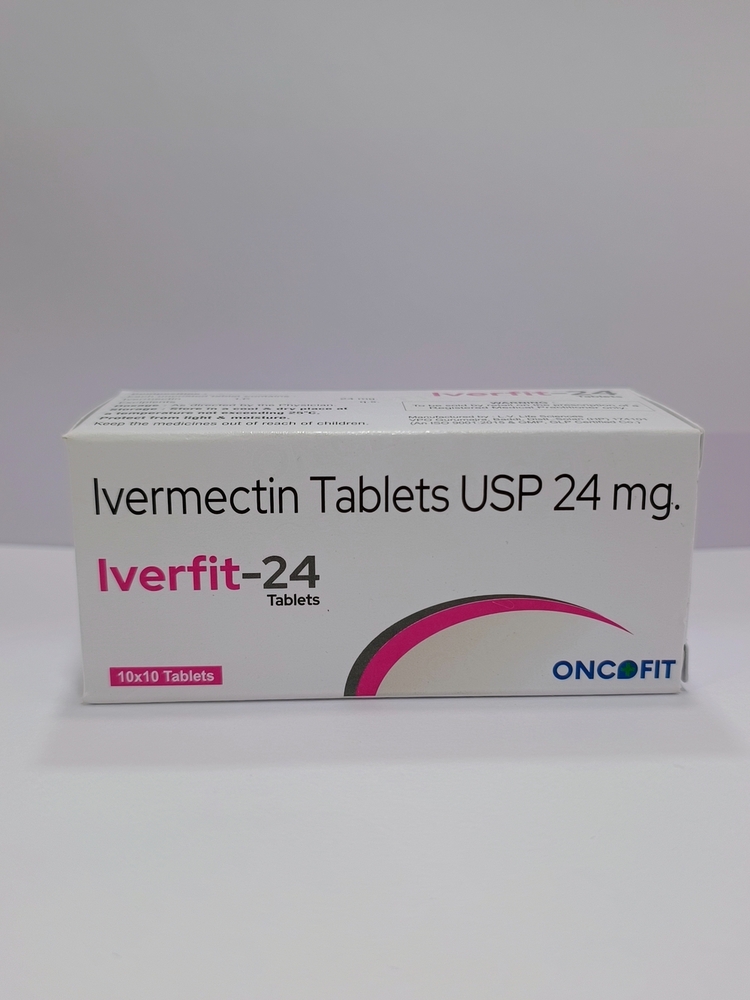
Description
Ivermectin 24 mg is a high-strength oral tablet of ivermectin, a macrocyclic lactone antiparasitic that is approved in many countries to treat strongyloidiasis (a threadworm infection of the gut) and onchocerciasis (river blindness). It is also widely used by clinicians under local guidance for scabies and certain other parasitic skin and gut conditions. This guide explains what the 24 mg strength represents, how ivermectin works, how weight-based dosing shapes which strength a prescriber chooses, and what safety points matter most.
Please note: ivermectin is a prescription medicine. It is not approved to prevent or treat viral infections, and health agencies including the U.S. FDA have warned against using it for COVID-19. Never take a veterinary ivermectin product. This page is educational and does not replace advice from a licensed clinician.
Quick Reference Card
| Medicine | Ivermectin |
|---|---|
| Strength | 24 mg per tablet |
| Class | Macrocyclic lactone antiparasitic (avermectin family) |
| Approved human uses | Intestinal strongyloidiasis; onchocerciasis. Scabies and other uses depend on country and prescriber |
| Dosing basis | Body weight (micrograms per kilogram) |
| Status | Prescription medicine in most regions |
| Not for | Viral infections, including COVID-19; veterinary-product substitution |
What Is Ivermectin?
Ivermectin was discovered in the 1970s from a soil bacterium found in a Japanese golf-course sample, and its discoverers later shared a Nobel Prize in Physiology or Medicine for the work. It first became a veterinary product, and in the 1980s it was adapted for people. Since then it has been donated in huge quantities for community programmes aimed at river blindness and lymphatic filariasis, and it remains one of the most important antiparasitic medicines in global health.
The drug is effective against a wide range of nematodes and some ectoparasites, such as scabies mites and head lice. It is generally not active against tapeworms, flukes or most protozoa, so it is not a general-purpose dewormer. A clinician chooses it when the specific parasite is known or strongly suspected.
How Ivermectin Works
Ivermectin binds to glutamate-gated chloride channels that are found in the nerve and muscle cells of invertebrates. When the drug locks these channels open, chloride ions flood into the cell, which paralyses the parasite’s muscles and nerves. The parasite can no longer feed or move, and it dies or is expelled. Mammals largely lack these glutamate-gated channels in the same form, and the drug does not cross the blood-brain barrier easily thanks to a protective pump, which explains its wide safety margin at approved doses.
This mechanism differs from the benzimidazole drugs such as mebendazole and albendazole, which starve worms by blocking tubulin. If you want a comparison of those two relatives, see albendazole vs mebendazole.
Understanding the 24 mg Strength Through Weight-Based Dosing
Many people see a tablet strength and assume it is a standard dose. With ivermectin that assumption is risky, because labelled dosing is tied to body weight. For intestinal strongyloidiasis, a commonly cited label dose is about 200 micrograms per kilogram, which is 0.2 mg per kg. The arithmetic below illustrates why different strengths exist. It is an educational illustration, not a prescription.
| Body weight | Approximate amount at 0.2 mg/kg | Strength that fits neatly |
|---|---|---|
| 15 kg | 3 mg | 3 mg |
| 30 kg | 6 mg | 6 mg |
| 60 kg | 12 mg | 12 mg |
| 100 kg | 20 mg | 20 mg |
| 120 kg | 24 mg | 24 mg |
As the table shows, a 24 mg tablet corresponds to the top end of the weight range, where the calculated amount would otherwise require many small 3 mg tablets. A single larger unit reduces pill count, simplifies adherence and lowers the chance of a counting error. A prescriber decides the actual amount after considering weight, diagnosis, other medicines and the product’s own leaflet. Never adjust the amount yourself.
Why higher strengths are not “stronger medicine”
A 24 mg tablet contains the same active molecule as a 3 mg tablet. The difference is the quantity per unit. Taking one 24 mg tablet in place of one 3 mg tablet would be an eight-fold overdose, so it is crucial to read the strength on the packaging every time.
What Conditions Is Ivermectin Used For?
Strongyloidiasis
Strongyloides stercoralis is a roundworm with an unusual ability to reproduce inside a person, which allows infections to persist for decades. It is a particular concern in people who later take corticosteroids or other immune-suppressing drugs, because the infection can then flare into a dangerous hyperinfection. Ivermectin is the preferred treatment for this reason.
Onchocerciasis (river blindness)
Spread by blackflies that breed near fast-flowing rivers, this infection causes severe itching, skin changes and, over time, blindness. Ivermectin kills the larval stage (microfilariae) but not the adult worms, so treatment is repeated at intervals in community programmes.
Scabies
Scabies is caused by a mite that burrows into the skin and provokes intense night-time itching. Oral ivermectin is used in many countries, and in others it is considered an off-label option, typically given as two doses about a week or two apart to catch newly hatched mites. Household contacts are usually treated at the same time.
Head lice and other uses
Topical ivermectin lotion is available for head lice in some markets. Oral ivermectin is used for some other nematode infections and for lymphatic filariasis in mass drug administration, again under local protocols.
What Ivermectin Is Not For
- COVID-19 and other viral infections: large clinical trials have not shown meaningful benefit, and regulators advise against use for this purpose.
- Cancer: no approved role exists for ivermectin in treating or preventing cancer.
- Tapeworms and flukes: a different drug, such as praziquantel, is needed.
- General “parasite cleansing”: taking ivermectin without a diagnosis offers no proven health benefit and carries risk.
The FDA has warned that animal ivermectin products, including those made for horses, are not safe for people and have caused poisonings. See the agency’s consumer update below in our external resources.
Safety and Side Effects
Common effects
- Dizziness or light-headedness
- Nausea, diarrhoea or abdominal pain
- Itching or rash
- Drowsiness or headache
The Mazzotti-type reaction
When microfilariae die in people with onchocerciasis, the body’s response to the dead larvae can cause fever, intense itching, swollen glands, joint pain and a drop in blood pressure. It is not a drug allergy. It is an immune reaction to dying parasites, and it is managed by clinicians in treatment programmes.
Special warning for Loa loa
In people who carry very high numbers of Loa loa (African eye worm) in the blood, ivermectin can trigger serious brain-related reactions. Doctors therefore take care before treating people who have lived in central African regions where Loa loa occurs.
Signs of overdose or toxicity
Severe symptoms include confusion, loss of balance, seizures, low blood pressure, vomiting and difficulty breathing. These are more likely when people take excessive amounts or use veterinary products. Seek emergency care immediately if they occur.
Who Should Talk to a Doctor Before Using Ivermectin?
- People who are pregnant or breastfeeding, because safety data are limited and benefits and risks must be weighed.
- Children weighing less than about 15 kg, for whom standard tablets are generally not recommended.
- Anyone taking warfarin or other blood thinners, because the combination can affect clotting tests.
- People who have lived in or travelled through areas where Loa loa is common.
- People with weakened immune systems or severe liver disease.
- Anyone who takes medicines that affect the liver enzyme CYP3A4 or the P-glycoprotein pump.
Drug and Food Interactions
Ivermectin is processed mainly by the liver enzyme CYP3A4 and moved by the transporter P-glycoprotein. Medicines that inhibit these pathways, such as some antifungals, certain macrolide antibiotics and ritonavir-containing regimens, may raise ivermectin levels. Medicines that induce them may lower levels. Warfarin users may need closer monitoring of their INR. Food, especially a fatty meal, can raise absorption noticeably, which is why labels specify whether to take the tablet fasting or with food. Follow the instruction on your leaflet exactly. Many of the principles are the same as for related antiparasitics, which you can see explained in our article on albendazole drug interactions.
Alcohol does not have a classic dangerous interaction with ivermectin, but it can add to dizziness and stomach upset. Our discussion in can you drink alcohol on albendazole offers a helpful parallel.
How Ivermectin Is Typically Taken
- Confirm the diagnosis with a clinician, ideally with a stool test for strongyloides or a skin examination for scabies.
- Take the tablet with water, following the fasting or food guidance on the leaflet.
- For scabies, follow the prescriber’s plan for a repeat dose, and treat close contacts together.
- Wash bedding, towels and clothing in hot water and dry on a hot cycle on the day of treatment.
- Expect itching from scabies to continue for a few weeks even after the mites are gone, because the skin takes time to settle.
- Return for follow-up testing if your clinician advises it, especially for strongyloidiasis.
How Long Does Ivermectin Stay in the Body?
Ivermectin has an elimination half-life of roughly 18 hours for the parent compound, while metabolites can linger for a few days. The medicine is cleared mainly through the faeces, with very little excreted in urine. The practical result is that most people clear it within about a week. For a comparison with another antiparasitic, read how long albendazole stays in your system.
Ivermectin Strengths Compared
| Strength | Why a prescriber may choose it |
|---|---|
| 3 mg | Smallest unit, useful for fine adjustment and lighter patients |
| 6 mg | Convenient for lower-to-mid body weights |
| 12 mg | Popular unit for average adult weights |
| 20 mg | Higher-weight patients with fewer tablets |
| 24 mg | Highest unit, intended for the heaviest weight bands or single-tablet convenience |
The strengths are interchangeable only in the sense that the same molecule is delivered. Substituting one for another requires careful arithmetic, which is why this decision belongs to a pharmacist or prescriber.
Ivermectin and Benzimidazoles: Complementary Tools
In practice, clinicians sometimes use ivermectin alongside a benzimidazole such as albendazole in mass-treatment programmes for lymphatic filariasis, or in travellers returning with mixed infections. Using two drugs together is a medical decision, and the combination needs checking for interactions. Our related page on Mebendazole 500 mg shows how a gut-focused benzimidazole differs from systemic ivermectin.
Spotting Substandard or Counterfeit Tablets
Ivermectin demand surged during the pandemic, and with it came a rise in poor-quality products. Safeguards include buying only from suppliers that list the exact strength and batch, checking that the packaging is sealed and legible, comparing the tablet’s appearance with the leaflet and keeping the leaflet for reference. Do not buy products marketed for horses, cattle or pets, as the concentration and excipients are not suitable for people.
Storage and Handling
Keep ivermectin tablets in their original pack at room temperature, away from moisture and light. Store them where children and animals cannot reach them. Do not use tablets after the expiry date. Dispose of leftovers through a pharmacy take-back scheme.
Real-World Scenarios Where Ivermectin May Be Considered
Scenario 1: A returning traveller with persistent gut symptoms
A traveller returns from a tropical region with intermittent diarrhoea and a raised eosinophil count. A stool test finds Strongyloides larvae. The clinician prescribes a weight-based dose of ivermectin and arranges follow-up testing, because untreated strongyloidiasis can last for decades.
Scenario 2: A scabies outbreak in a household
Several family members are scratching at night, and a doctor confirms scabies. The plan includes oral ivermectin for those it is suitable for, a repeat dose, treatment of all contacts on the same day and a thorough wash of linens. Children and pregnant relatives are handled with topical alternatives where appropriate.
Scenario 3: A patient about to start long-term steroids
A person from an endemic area is due to begin high-dose corticosteroids. Because dormant strongyloides can flare under immune suppression, the doctor screens and treats beforehand. This preventive step is one of the most valuable uses of the drug.
A Closer Look at Pharmacokinetics
Pharmacokinetics describes what the body does to a medicine: how it is absorbed, distributed, metabolised and eliminated. For ivermectin, the numbers help explain several practical instructions on the label.
Absorption
After an oral dose, ivermectin reaches peak blood levels in about four hours. Absorption is variable between people and rises when the tablet is taken with a fat-containing meal. That is why labels often specify a fasting dose with water, which keeps exposure predictable, and why switching between fasting and fed dosing without advice can change how much drug reaches the bloodstream.
Distribution
The drug is highly bound to plasma proteins and distributes widely into tissues, including the skin, where scabies mites live. It penetrates the central nervous system poorly in humans because the P-glycoprotein pump at the blood-brain barrier actively pushes it back out. When that pump is overwhelmed by very high doses, blocked by interacting drugs, or genetically less active, neurological symptoms become more likely.
Metabolism and elimination
The liver metabolises ivermectin through CYP3A4, producing several metabolites that are excreted almost entirely in faeces over about twelve days. Less than one percent appears in urine. This route of elimination means kidney disease has little direct effect on dosing, although liver disease may.
Ivermectin in Global Health Programmes
Few medicines have had the public-health reach of ivermectin. Since the late 1980s, donation programmes have delivered billions of treatments, helping to interrupt river blindness transmission across large parts of Africa and Latin America. In lymphatic filariasis programmes, ivermectin is often paired with albendazole, and in some regions it is used in community treatment of scabies. These efforts rely on simple, single-dose regimens, weight-estimated by height, which is another reason the drug is made in several strengths.
The experience from these programmes also supports the safety record of the drug at approved doses, because it has been given to very large populations. At the same time, the programmes highlight the importance of screening for Loa loa in affected regions, where the risk of severe reactions is real.
Comparing Ivermectin With Other Antiparasitic Choices
| Medicine | Strong points | Limits |
|---|---|---|
| Ivermectin | Strongyloides, onchocerciasis, scabies; single-dose convenience | Weight-based dosing; not for tapeworms; Loa loa caution |
| Albendazole | Wide gut-worm coverage plus tissue cysts | Needs fat for absorption; liver monitoring in long courses |
| Mebendazole | Gentle gut-focused option for common worms | Poor absorption; not for tissue infection |
| Permethrin cream | First-line topical for scabies | Requires full-body application and careful repetition |
| Praziquantel | Schistosomiasis, tapeworms, flukes | Different spectrum; not for strongyloides |
For a plain-language look at two of these relatives, visit albendazole vs mebendazole and albendazole for pinworms.
Checklist: Before Your Appointment
- Write down your weight and, for a child, the most recent weight measured.
- List every medicine, supplement and herbal product you use.
- Note any travel to tropical or subtropical regions in the past several years.
- Record when symptoms began and what makes them better or worse.
- Mention pregnancy, breastfeeding or plans to conceive.
- Bring any previous stool-test or skin-scraping results.
Common Mistakes People Make With Antiparasitic Tablets
- Guessing the dose. Online calculators and forum posts are not a substitute for a prescriber, and errors in either direction have consequences.
- Using the wrong product. Horse paste, cattle pour-on and pet tablets are formulated for animals and have caused hospital admissions in people.
- Treating without testing. Without a diagnosis, you may treat a parasite that is not there and miss the real cause of your symptoms.
- Ignoring contacts. Scabies and pinworm spread within households, so treating only one person often fails.
- Stopping hygiene measures early. Washing linens and cleaning surfaces matters as much as the tablet.
- Expecting instant relief. Itching can linger for weeks after scabies mites have died, and that does not always mean treatment has failed.
A note on follow-up
Some infections need confirmation that treatment worked. Strongyloidiasis in particular may require repeat stool tests over several months, because a few surviving larvae can restart the cycle. Keep your follow-up appointments even when you feel well.
How We Suggest You Use This Page
Treat this page as a reference you can bring to a conversation with your pharmacist or doctor. If you are comparing products, use the strength table to understand how weight affects the choice, and use the linked guides to explore related medicines. If you are a healthcare professional or a licensed dispensing business, the product details above can help you explain strengths to patients in clear language.
Frequently Asked Questions
Is ivermectin 24 mg safe?
When prescribed for an appropriate weight and diagnosis, ivermectin has a long safety record. A 24 mg tablet is not safe for someone who weighs far less than the range it is designed for, or for anyone not under medical direction.
Can I use ivermectin for COVID-19?
No. Regulators and major trials do not support this use.
Can I cut a 24 mg tablet?
Only if the leaflet says it is scored and a prescriber has told you to. Uneven pieces make dosing unreliable.
How quickly does it work?
Parasites start to die within hours, but symptoms such as itching may take days or weeks to resolve fully.
Do I need a repeat course?
For scabies a second dose is common, and strongyloidiasis may need follow-up testing. Your prescriber will decide.
Can children take ivermectin?
Standard tablets are usually reserved for children above about 15 kg. Younger or lighter children need specialist advice.
Is horse ivermectin the same?
No. Veterinary formulations have different concentrations and ingredients, and overdoses have caused serious poisoning.
Does ivermectin treat tapeworms?
No. A different medicine is required.
Reliable External Resources
- FDA: Why you should not use ivermectin to treat or prevent COVID-19
- CDC parasites resource centre
- DailyMed: ivermectin labels
Summary
Ivermectin 24 mg is a high-strength tablet of a well-established antiparasitic, designed to match the upper end of weight-based dosing. It paralyses susceptible parasites by acting on invertebrate chloride channels, it treats strongyloidiasis and onchocerciasis, and it is widely used for scabies under medical supervision. It has no approved role against viruses or cancer, and veterinary versions are not a substitute. Compare the other strengths using the links above, review our related reading on side effects of related antiparasitics, and speak with a clinician before you use it.
Disclaimer: This content is for general information only and is not medical advice. Always consult a qualified healthcare professional.







Reviews
There are no reviews yet.