
Description
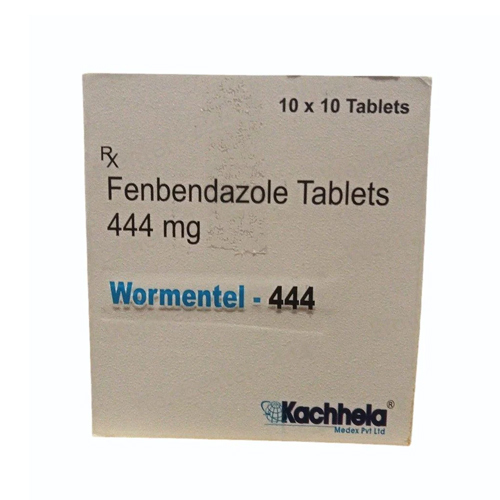
Fenbendazole 444 mg is a high-strength benzimidazole anthelmintic, a deworming compound that belongs to the same chemical family as albendazole and mebendazole. It has been used for decades in veterinary medicine to clear roundworms, hookworms, whipworms and certain tapeworms from dogs, cats, horses and livestock. This page explains what the 444 mg strength means, how the compound works, how it differs from related antiparasitic medicines, and what you should know about safety, storage and regulation before you order.
Important regulatory notice: fenbendazole is approved by regulators such as the U.S. FDA only as an animal drug. It has not been approved for the prevention or treatment of any condition in people. Nothing on this page is medical advice, and this product must not be presented as a treatment for any human disease. If you are looking for a human-approved antiparasitic, read our guide to albendazole vs mebendazole and speak to a licensed prescriber.
Fenbendazole 444 mg at a Glance
| Active ingredient | Fenbendazole |
|---|---|
| Strength | 444 mg per unit |
| Drug class | Benzimidazole anthelmintic (broad-spectrum dewormer) |
| Regulatory status | Approved for veterinary use; not approved for human use |
| Typical target parasites | Ascarids (roundworms), hookworms, whipworms, Taenia tapeworms, Giardia in some veterinary protocols |
| Route | Oral |
| Storage | Cool, dry place, away from light, out of reach of children and pets |
What Is Fenbendazole?
Fenbendazole is a synthetic compound first introduced in the 1970s as a broad-spectrum dewormer for animals. Chemically it is a methyl carbamate benzimidazole. Veterinarians value it because it is poorly absorbed from the gut, which keeps most of the active compound where the worms live, and because animals generally tolerate it well when it is given at labelled doses.
In practice, the compound is sold under several veterinary brand names and in forms such as granules, pastes, suspensions and tablets. The 444 mg tablet is a larger-format unit. It is often chosen for heavier animals or for situations where a prescriber wants fewer units per dose. Because dose is always calculated from body weight and the species being treated, the strength on the box is only one part of the picture.
A short history of the benzimidazoles
The benzimidazole family changed parasite control in the second half of the twentieth century. Thiabendazole arrived first, followed by mebendazole, albendazole, oxfendazole and fenbendazole. Each molecule is a variation on the same core ring structure, and each has a slightly different absorption profile and spectrum. Mebendazole and albendazole were developed for human use, while fenbendazole and oxfendazole stayed in veterinary medicine. That split is the root of today’s regulatory position: the molecules are cousins, but their approvals are not interchangeable.
How Fenbendazole Works Against Worms
Parasitic worms rely on a protein called tubulin to build microtubules, which are tiny internal scaffolds used for cell division, nutrient transport and movement of material inside the cell. Fenbendazole binds to beta-tubulin in the parasite and prevents it from assembling into microtubules. Without working microtubules, the worm’s intestinal cells cannot absorb glucose properly. Energy stores run down, and the parasite eventually dies and is passed out of the host in the stool.
This mechanism is selective because parasite tubulin binds benzimidazoles much more tightly than mammalian tubulin does. That selectivity explains why the drug class has a wide safety margin in animals at labelled doses. It does not mean the compound is harmless to every species, and it does not mean that animal-grade products are suitable for people.
Why the worm dies slowly
Fenbendazole does not paralyse worms the way some other dewormers do. It starves them. Because starvation takes time, veterinary protocols usually run for several consecutive days rather than a single dose. A shorter exposure may clear fewer parasites or let some survive to produce eggs again.
What the 444 mg Strength Means
A tablet strength is simply the amount of active ingredient per unit. A 444 mg tablet holds more than twice the active ingredient of a 222 mg tablet and roughly three times that of a 150 mg tablet. If you also stock our Fenbendazole 222 mg and Fenbendazole 150 mg products, you will notice that the three strengths exist to give prescribers flexibility rather than to change what the drug does.
- Larger animals: a higher unit strength reduces the number of tablets that must be given per dose.
- Dose accuracy: weight-based dosing is easier to match when several strengths are available.
- Compliance: fewer, larger units can be simpler to administer over a multi-day course.
- Splitting and storage: scored tablets of different sizes allow a prescriber to build a dose without waste.
Never assume that a bigger tablet is a stronger treatment. The correct amount is set by the prescriber and the product label for the specific animal, and exceeding it does not clear worms faster.
Parasites Fenbendazole Is Known to Target
The labelled spectrum depends on species and product, but veterinary references commonly list the following groups.
Roundworms (ascarids)
Toxocara and Toxascaris are common in puppies and kittens. They live in the small intestine and are passed in faeces as hardy eggs that can persist in soil for long periods.
Hookworms
Ancylostoma and Uncinaria attach to the intestinal wall and feed on blood. Heavy burdens can cause anaemia, particularly in young animals.
Whipworms
Trichuris species live in the large intestine and are notorious for recurring, because eggs survive in the environment for years. Repeat treatment and hygiene are central to control.
Tapeworms of the Taenia group
Fenbendazole is active against Taenia species but not against the flea-borne tapeworm Dipylidium, which is why a vet will pick a different product when fleas are involved.
Large-animal parasites
In horses and ruminants the compound is used against strongyles and other gastrointestinal nematodes, and certain lungworms, with dosing that differs sharply from companion-animal protocols.
Fenbendazole Compared With Other Antiparasitic Medicines
Shoppers often arrive at this page after searching for a different antiparasitic. The table below shows where fenbendazole sits among the most-searched options in this category. All comparisons are educational.
| Compound | Main regulatory use | Chemical family | Mode of action |
|---|---|---|---|
| Fenbendazole | Veterinary | Benzimidazole | Blocks tubulin assembly; starves worm |
| Mebendazole | Human and veterinary | Benzimidazole | Blocks tubulin assembly; reduces glucose uptake |
| Albendazole | Human and veterinary | Benzimidazole | Blocks tubulin assembly; also affects larval cysts |
| Ivermectin | Human and veterinary | Macrocyclic lactone | Opens glutamate-gated chloride channels; paralyses parasite |
If you want to understand the human-approved relatives in more depth, read our articles on albendazole vs mebendazole and albendazole for pinworms. Our product pages for Mebendazole 500 mg and Ivermectin 12 mg cover the human-approved side of the category.
Cancer Claims and Social Media: What the Evidence Actually Says
Fenbendazole has circulated on social media with claims that it can treat or cure cancer. Fact-checkers and regulators have addressed this directly. The U.S. FDA has stated that it has not authorized or approved fenbendazole for preventing or treating cancer in people, and it has warned consumers not to use animal medications on themselves. Laboratory work on benzimidazoles in cancer cells exists, and that research is interesting to scientists, but laboratory findings are not the same as proven clinical benefit. No controlled human trial has established fenbendazole as a cancer treatment.
For this reason we do not make disease claims about this product. Anyone with a cancer diagnosis should discuss treatment only with an oncologist, because delaying proven care for an unproven alternative can cause serious harm.
Safety Considerations
Known cautions in animals
- Mild digestive upset such as vomiting or loose stool is the most commonly reported effect.
- Rare allergic-type reactions have been reported with dying parasites in heavy infections.
- Pregnant and very young animals should be treated only under veterinary direction.
- Some species, including certain birds, can react badly to benzimidazoles. Always confirm species suitability first.
Why animal-grade products are not for people
Veterinary products are manufactured and tested for animals. Excipients, purity standards, labelling and dose design are all built around animal use. Human case reports have linked unsupervised use of veterinary benzimidazoles to liver injury and drug interactions. For that reason, regulators advise against self-treatment with animal products.
Handling precautions
Wash your hands after handling tablets. Keep the product away from food preparation areas. Store it where children and pets cannot reach it. If someone accidentally swallows a tablet, contact a poison control centre or a doctor immediately.
Possible Interactions to Be Aware Of
In the benzimidazole class, absorption and metabolism are influenced by diet and by medicines that act on liver enzymes. Fatty meals can increase absorption of some members of the family. Enzyme inducers such as certain anticonvulsants may lower drug levels, while enzyme inhibitors may raise them. For a clear explanation of how this works in a human-approved relative, see our article on albendazole drug interactions, and for alcohol-related questions see can you drink alcohol on albendazole.
How Long Does It Stay in the Body?
Because benzimidazoles are absorbed in small amounts and metabolised in the liver, the active compound and its metabolites generally clear within days rather than weeks in animals. Exact figures depend on the species, dose and formulation. For a human-approved comparison, our guide to how long albendazole stays in your system illustrates how this class behaves.
Who Should Buy Fenbendazole 444 mg?
- Licensed veterinary practices and animal-health professionals.
- Livestock keepers and horse owners who work under a veterinarian’s herd-health plan.
- Researchers and laboratories operating within the law, who need a defined-strength reference material.
It is not appropriate to purchase this product intending to take it yourself. If your goal is to treat a human intestinal worm infection, a clinician can prescribe a human-approved option and confirm the diagnosis with a stool test first.
Buying Guide: Choosing Between 444 mg, 222 mg and 150 mg
| Strength | Best suited to | Why people choose it |
|---|---|---|
| 444 mg | Large animals and high-dose protocols | Fewer units per dose |
| 222 mg | Medium animals | Balanced unit size for mid-range weights |
| 150 mg | Small animals and fine adjustment | Easier to build smaller, precise doses |
The right option is the one that lets your prescriber reach the labelled dose with the fewest awkward splits. When in doubt, ask the clinician who is managing the animal.
Quality, Packaging and Storage
Check that the blister or bottle is sealed and that the batch number and expiry date are legible. Keep the product in its original packaging at room temperature, away from humidity and direct sunlight. Discard anything past its expiry date through a medicine take-back scheme rather than flushing it. If packaging looks damaged, do not use it, and contact customer support.
Responsible Parasite Control Beyond the Tablet
Medication is only one part of parasite control. Sustainable programmes also include:
- Diagnosis first: a faecal egg count identifies which parasites are present and whether treatment is necessary.
- Environmental hygiene: remove faeces promptly, since many eggs become infective after several days outdoors.
- Rotational planning: a veterinarian may rotate drug classes to slow the development of resistance.
- Follow-up testing: repeat the egg count after treatment to confirm the worms have cleared.
Resistance to benzimidazoles is a recognised problem in some livestock parasites, particularly in small ruminants and horses. Using the right dose for the right duration, and not treating by habit, helps preserve the drug’s usefulness.
Understanding Parasite Life Cycles and Why Timing Matters
Most gastrointestinal worms follow a predictable cycle. Adult worms live in the gut and shed eggs into the faeces. Those eggs develop in soil, bedding or water until they become infective, and a new host swallows them, or in the case of hookworms the larvae may penetrate skin. Inside the new host, larvae migrate or mature, and a new generation of adults starts laying eggs. The interval between infection and egg shedding is called the prepatent period, and it varies from about two weeks for some roundworms to several weeks for whipworms.
This matters for fenbendazole because a dewormer that clears adult worms today will not prevent re-infection tomorrow if the environment is still contaminated. That is why veterinary plans usually repeat treatment at set intervals, particularly in puppies, kittens and foals, and why they pair medication with cleaning routines.
Why young animals are treated more often
Puppies and kittens can be infected before birth or through milk, so they often carry worms before they are old enough to show symptoms. Early, repeated treatment protects growth and reduces the number of eggs reaching the environment. Adult animals with good immunity may need treatment less often, and a faecal test can tell a vet whether another course is justified.
Reading a Veterinary Label Like a Professional
A good label tells you far more than the strength. Before using any animal dewormer, look for these elements:
- Species statement: the animals the product is approved for.
- Weight band or dose table: the amount per kilogram or per weight range.
- Duration: the number of days the product should be given.
- Withdrawal period: for food-producing animals, the time that must pass before meat, milk or eggs can enter the food chain.
- Contraindications: life stages, pregnancy and concurrent medicines that require caution.
- Storage and disposal: temperature limits and how to discard unused product.
The withdrawal period is easy to overlook and it matters for farmers. Treating a dairy or meat animal and then selling products too soon can break food-safety rules.
Dose Principles in Plain Language
We do not publish personal dosing schedules, because correct doses depend on the species, age, weight, health status and parasite involved. What can be said in general terms is that veterinary benzimidazole protocols are based on milligrams of active ingredient per kilogram of body weight, are usually given once daily for a set number of consecutive days, and are most effective when the full course is completed. Underdosing may leave survivors that pass on resistance genes. Overdosing adds side effects without adding benefit.
A practical way to think about it: the three strengths we stock, 444 mg, 222 mg and 150 mg, are like measuring cups in different sizes. Using the right combination gets a prescriber to the target amount without waste. The strength is a tool, not a recommendation.
Drug Resistance: A Growing Concern
Anthelmintic resistance occurs when parasites survive treatments that once worked. It is well documented for benzimidazoles in sheep, goats and horse strongyles, and it has been reported in some canine hookworm populations. Resistance develops through repeated exposure to sub-lethal doses and through treating whole groups of animals when only some need it.
Ways to slow resistance include running egg-count tests before and after treatment, dosing by actual weight rather than estimated weight, quarantining and treating new arrivals, and rotating chemical classes under veterinary guidance. Each of these habits protects the usefulness of drugs such as fenbendazole for the next generation of animals.
Myths and Facts About Fenbendazole
| Common claim | What is known |
|---|---|
| “It is the same as the human medicine, just cheaper.” | Related molecules have human approvals, but fenbendazole itself does not, and animal products are not tested or made to human standards. |
| “A higher strength works faster.” | Worms are cleared by the cumulative course, not by tablet size. Higher strength does not mean quicker action. |
| “It cures cancer.” | No regulator has approved it for this use and no controlled human trial supports the claim. |
| “If it is safe for dogs, it is safe for me.” | Species differ in metabolism and tolerance. Animal safety data do not transfer to people. |
| “One dose clears everything.” | Many protocols require several days, plus a follow-up, to break the life cycle. |
Regulation Around the World
In the United States, fenbendazole is regulated as an animal drug and appears in FDA-approved veterinary products. In the European Union it is authorised through veterinary medicines pathways. Rules on over-the-counter sale, prescription requirements and use in food-producing animals differ by country and by state or region, so it is your responsibility to check what applies where you live. If you are a business, confirm that you hold any licence required to purchase, store or distribute veterinary medicines.
Customers who order from outside their home country should also check import rules. Customs agencies can hold or refuse shipments of medicines that lack the correct documentation.
When to Call a Veterinarian Instead of Treating at Home
Parasite signs can overlap with other illnesses. Contact a vet promptly if an animal shows any of the following:
- Persistent vomiting, bloody stool or severe diarrhoea.
- Pale gums, weakness or collapse, which can indicate anaemia.
- A swollen abdomen in a young animal with poor growth.
- Coughing that could suggest migrating larvae in the lungs.
- Visible worms combined with lethargy or loss of appetite.
A vet can confirm which parasite is responsible, rule out other conditions and recommend the right product and duration.
What We Recommend Before You Order
- Confirm that the product is legal for your intended use and location.
- Get a diagnosis, ideally a faecal test, so you treat the correct parasite.
- Ask a veterinarian to confirm the strength and number of units for your animal’s weight.
- Plan a follow-up test to confirm that treatment worked.
- Store the product safely and keep the leaflet or label for reference.
Frequently Asked Questions
Is fenbendazole 444 mg approved for humans?
No. Fenbendazole is approved only for animals. Human-approved benzimidazoles include mebendazole and albendazole.
Does fenbendazole treat cancer?
There is no approved indication and no proven clinical evidence for this use. Regulators have warned against claims that it treats cancer.
What is the difference between fenbendazole and mebendazole?
They are both benzimidazoles with similar mechanisms. Mebendazole has human approvals, while fenbendazole is a veterinary drug.
Can I split a 444 mg tablet?
Only if the product is designed to be split and a prescriber has told you to. Uneven splitting makes dose control unreliable.
How long does a course last?
Veterinary courses commonly run over several consecutive days, but the exact length depends on species and parasite. Follow the product label or your vet.
Can fenbendazole be given with food?
Many animal protocols recommend giving it with a meal. Your vet will advise on the best approach.
What if a dose is missed?
Contact your prescriber for advice rather than doubling the next dose.
Does it kill worm eggs?
It has activity against some eggs, but it is primarily used against adult and larval worms. Environmental cleaning is still required.
Useful External Resources
- CDC Parasites information hub
- WHO fact sheet on soil-transmitted helminth infections
- DailyMed drug label database (U.S. National Library of Medicine)
Summary
Fenbendazole 444 mg is a high-strength veterinary dewormer in the benzimidazole family. It works by blocking tubulin in parasites, it is effective against several common gastrointestinal worms in animals, and it has a long record of use in veterinary medicine. It is not approved for human use, it is not a cancer treatment, and it should be purchased and used only within the law and under professional guidance. Explore our related pages on albendazole side effects and the product pages linked above to compare strengths and categories.
Disclaimer: This content is for general information and does not replace professional veterinary or medical advice. Fenbendazole is approved for veterinary use only.







Reviews
There are no reviews yet.