
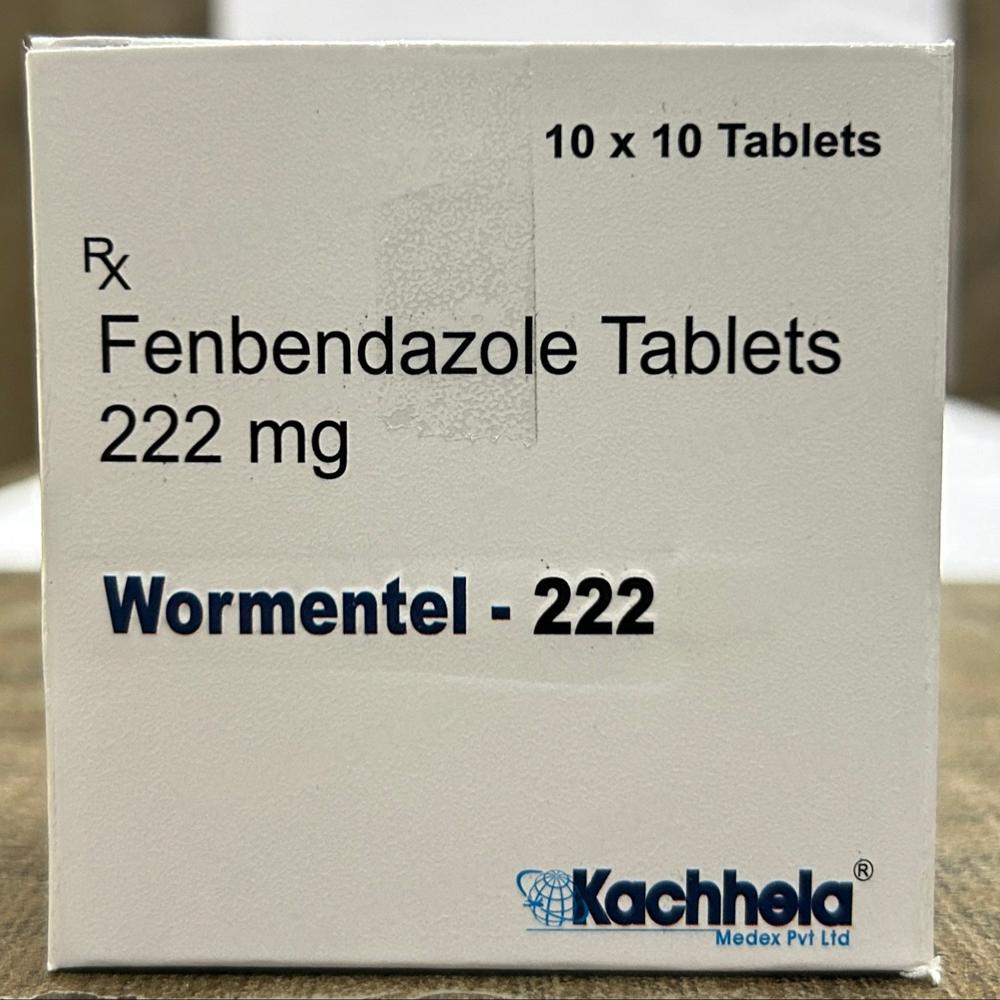
Description
Parasite control is rarely about one tablet. It is about choosing the right unit size, the right timing and the right follow-up so that worms are cleared without encouraging resistance. Fenbendazole 222 mg is a mid-strength veterinary benzimidazole dewormer, and this guide uses it as a case study in how professionals think about anthelmintic strategy: what the strength is for, how it fits between smaller and larger units, why resistance matters, and how to build a programme that keeps working season after season.
Regulatory notice: fenbendazole is approved for use in animals only. It is not approved for any human use, and this page makes no claim that it treats any human disease. For human-approved alternatives, see our article on albendazole vs mebendazole and consult a licensed clinician.
Fenbendazole 222 mg: Key Facts
| Active ingredient | Fenbendazole |
|---|---|
| Unit strength | 222 mg |
| Class | Benzimidazole carbamate anthelmintic |
| Intended users | Veterinary professionals and animal keepers working under professional guidance |
| Species context | Companion animals, horses and livestock (species-specific labelling applies) |
| Status | Veterinary drug; not for human consumption |
| Sister strengths | 150 mg and 444 mg |
The Mid-Strength Logic: Why 222 mg Exists
Think of unit strength the way a baker thinks of measuring spoons. A teaspoon, a tablespoon and a cup can all deliver the same quantity of flour, but you reach for the one that gets you there with the least fuss and the least error. A 222 mg tablet sits between a smaller 150 mg unit and a larger 444 mg unit. In weight-based dosing, that middle size often lets a prescriber reach a target amount with a whole number of tablets, instead of cutting a large tablet in half or stacking several small ones.
Whole tablets matter more than they appear to. Tablets that are split by hand rarely divide evenly, and uneven halves lead to uneven dosing across a multi-day course. When one animal receives a slightly low amount and another a slightly high amount, the programme loses precision, and low exposure is exactly the condition that helps resistant parasites survive.
A simple way to picture it
| Scenario | Unit that tends to simplify the arithmetic |
|---|---|
| Small animals needing a precise, light dose | 150 mg |
| Medium animals where a whole tablet or two reaches the target | 222 mg |
| Large animals where one tablet should cover a sizeable dose | 444 mg |
These are illustrations of the reasoning, not dosing instructions. The label and the treating veterinarian determine the amount for each animal.
How Fenbendazole Kills Worms
Fenbendazole attaches to beta-tubulin in parasitic worms and blocks the formation of microtubules. Microtubules are the internal tracks that cells use for nutrient absorption, waste handling and division. With the tracks disrupted, the worm’s gut cells cannot take up glucose. The parasite burns through its reserves, weakens and dies, and the dead worms leave the host in the faeces.
Two points follow from this mechanism. First, the effect builds up over time, so courses typically span several days. Second, the drug is selective, because parasite tubulin is far more sensitive to benzimidazoles than the tubulin of mammals. That is why the family has a wide safety margin in the species it is approved for, and why the same safety data cannot simply be carried over to people.
Resistance: The Reason Strategy Matters
Resistance is the central challenge in modern parasite control. Worm populations contain natural genetic variation, and when a drug is used again and again, the few worms that carry resistant genes survive and breed. Over several seasons the resistant genes spread. Benzimidazole resistance is especially well documented in small-ruminant strongyles and in horse cyathostomins, and it has been reported in some canine hookworms.
Five habits that slow resistance
- Test before you treat. A faecal egg count shows whether treatment is needed and which animals are shedding most heavily.
- Dose by measured weight. Guessing weight leads to underdosing in heavier animals, which is a classic resistance driver.
- Leave some parasites unexposed. In grazing systems, parasites that are not exposed to the drug (called refugia) dilute resistant genes in the population. A vet may recommend not treating every animal at every visit.
- Quarantine new arrivals. Treat and test them before they join the herd or yard so they do not bring resistant worms in.
- Re-test after treatment. A faecal egg count reduction test, done about two weeks afterwards, tells you whether the drug actually worked on your farm or kennel.
The faecal egg count reduction test explained
This test compares egg counts before and after treatment. If a properly dosed course reduces counts by more than about ninety to ninety-five percent, the drug is working well. A smaller reduction suggests resistance or a dosing problem. The method is inexpensive, and it converts a vague worry into a number you can act on.
Where Fenbendazole Sits Among Dewormer Classes
| Class | Examples | Typical strength of the class | Weakness to remember |
|---|---|---|---|
| Benzimidazoles | Fenbendazole, albendazole, mebendazole | Broad gut-worm coverage, good safety margin | Resistance common in some livestock parasites |
| Macrocyclic lactones | Ivermectin, moxidectin | Also act on external parasites and some larvae | Dose-sensitive in certain dog breeds; resistance emerging |
| Tetrahydropyrimidines | Pyrantel | Fast action against ascarids and hookworms | Narrower spectrum |
| Praziquantel | Praziquantel | Excellent against tapeworms | Does not cover roundworms |
Veterinary programmes sometimes alternate classes, or use combination products, to reduce selection pressure. If you are curious about the human-approved members of the benzimidazole and macrocyclic lactone groups, you can read about Mebendazole 500 mg and Ivermectin 12 mg.
Building a Seasonal Programme Around the Parasite Calendar
Parasite pressure changes through the year. A good programme follows it instead of treating on a fixed date out of habit.
Spring
Warming soil allows eggs shed over winter to hatch and become infective. Young animals born in spring are especially exposed. This is often the time for egg-count testing and for deciding who needs treatment.
Summer
High temperatures can kill larvae on dry pasture, but damp spells encourage survival. Rotational grazing and prompt removal of droppings lower the number of infective larvae.
Autumn
Animals pick up larvae before winter, and some parasites can pause their development inside the host. A late-season check helps decide whether a treatment is worthwhile.
Winter
Development slows outdoors, but indoor housing can sustain certain parasites. Hygiene and stocking density matter most now.
Safety, Handling and Species Cautions
- Confirm the species. Some animals, including certain birds, can react badly to benzimidazoles.
- Take care with pregnancy and young stock. Use only under veterinary direction.
- Watch for mild effects. Loose stool or reduced appetite can occur. Persistent signs need a vet.
- Respect withdrawal times. In food-producing animals, meat, milk and eggs cannot enter the food chain until the stated withdrawal period has passed.
- Wash hands after handling. Keep tablets away from food preparation areas, children and pets that are not being treated.
Why animal medicines are not for people
Veterinary tablets are made, tested and labelled for animals. Their excipients, purity limits and dosing designs differ from those of human medicines. Regulators including the U.S. FDA advise against using animal drugs on yourself, and unsupervised use of veterinary benzimidazoles in people has been linked in case reports to liver injury and drug interactions. If you suspect a worm infection in yourself or a family member, see a clinician, who can confirm it and prescribe an approved treatment.
Interaction and Absorption Notes
Benzimidazoles are absorbed in small amounts and are processed by the liver. Food, especially fatty food, can raise absorption of some members of the family, and medicines that induce or inhibit liver enzymes can change drug levels. Because fenbendazole is intended to act in the gut, the practical risk is low in properly treated animals, but a vet should review any other medicines in use. For a clear human-drug example of how interactions work in this class, see albendazole drug interactions.
Storage, Shelf Life and Disposal
Store tablets in their original packaging, in a cool and dry place, away from direct sunlight. Keep them out of reach of children and animals. Check the expiry date, and do not use tablets that are discoloured, crumbling or damp. Do not flush unused tablets. Return them to a medicine take-back point or follow local veterinary-waste rules.
Choosing Between 222 mg and Its Sister Strengths
| Question | If the answer is yes |
|---|---|
| Does the target dose divide neatly into whole 222 mg tablets? | 222 mg is probably the simplest unit. |
| Would you need to split a lot or add many tablets? | Ask your vet whether 150 mg or 444 mg reduces the fuss. |
| Are you dosing several animals of very different weights? | Stocking more than one strength may reduce waste and error. |
| Is the animal fussy about taking tablets? | Fewer, appropriately sized units can help, and a vet may suggest a different form. |
Record-Keeping: The Unglamorous Habit That Pays Off
Strong programmes keep simple records. Note the date, animal identity, weight, product, strength, number of units, batch number and the result of any follow-up egg count. Over a year or two, these notes reveal patterns, such as one paddock that keeps producing high counts or one animal that always sheds more eggs. They also protect you if there is ever a dispute about withdrawal times or product use.
Case Studies: How Professionals Apply the Mid-Strength Unit
Case 1: A multi-dog household with mixed sizes
A rescue home looks after a terrier, a spaniel and a retriever. Each dog has a different weight, so a single tablet size would be wasteful. The vet weighs each dog, calculates three separate amounts and decides which strengths build each dose with the fewest cuts. The mid-size unit covers the spaniel neatly, while the terrier and retriever are served better by the smaller and larger strengths. The lesson is that a range, not a single product, is what makes accurate dosing practical.
Case 2: A small flock with a resistance concern
A smallholder notices that sheep keep losing condition despite regular treatment. A faecal egg count reduction test shows that the egg count fell by only half after dosing. The vet suspects benzimidazole resistance and suggests testing other drug classes, improving pasture rotation and treating only the animals with the highest counts. This case shows why testing beats routine dosing.
Case 3: A yard with a new horse
A horse arrives at a livery yard from another county. Rather than turning it straight out with resident horses, the owner isolates it, collects a faecal sample and treats according to the result. The yard avoids importing resistant worms and keeps its pasture cleaner.
Understanding Egg Counts in Plain English
A faecal egg count is expressed as eggs per gram of faeces. A low number does not always mean a light burden, because female worms shed eggs irregularly, and some life stages do not shed eggs at all. Veterinarians therefore interpret counts alongside age, body condition, grazing history and clinical signs. In horses, for example, a small number of animals typically shed the majority of eggs, which is why targeted treatment can protect resistance without sacrificing welfare.
| Result | What it may suggest | Possible next step |
|---|---|---|
| Very low count in a healthy adult | Low shedding | May not need treatment; retest later |
| Moderate count | Some burden | Discuss targeted treatment with a vet |
| High count | Heavy shedding | Treat, then test again after about two weeks |
| Little change after treatment | Possible resistance or dosing error | Review weight, dose and product choice |
The Anatomy of a Good Dose Record
A simple sheet or spreadsheet works. Include these columns: date, animal name or tag, measured weight, calculated amount, product and strength, number of units given, batch number, who administered it and any observations afterwards. Many veterinary practices also record the next test date. A year of tidy records turns guesswork into evidence.
Environmental Control: The Other Half of Treatment
Medication clears the worms in the animal, but eggs and larvae in the environment can restart the cycle within days. Practical measures include:
- Removing droppings from paddocks and yards at least twice a week, and daily in small enclosures.
- Avoiding overstocking, which raises parasite pressure.
- Resting pastures or grazing them with a different species, since many parasites are host-specific.
- Cleaning feeding and watering equipment to prevent faecal contamination.
- Composting manure properly, because sustained heat reduces infective stages.
Questions to Put to Your Veterinarian
- Which parasites are most likely to affect my animals in this region and season?
- Should I run an egg count before treating?
- Which unit strength lets me reach the right amount with whole tablets?
- How many days should the course last, and should I plan a repeat?
- Is there a withdrawal time I must respect for meat, milk or eggs?
- When should I retest to confirm the treatment worked?
Myths About Dewormers That Cost Money and Weaken Results
- “Rotate to a new product every treatment.” Rotation without testing may not slow resistance and can add cost. Strategy should be guided by results.
- “Treat everything every few weeks.” Blanket frequent dosing increases selection pressure.
- “Natural dewormers replace medicine.” Herbs such as garlic or wormwood have not been shown to reliably clear significant burdens.
- “If the animal looks healthy, it is worm-free.” Many animals carry worms without obvious signs.
Understanding Withdrawal Periods in Food-Producing Animals
When an animal that provides meat, milk or eggs receives a veterinary medicine, traces can remain in tissues for some time. The withdrawal period is the minimum interval between the last dose and the point at which products may safely enter the food chain. Authorities set these intervals after studying how quickly residues fall to acceptable levels. They differ by drug, species, product and sometimes by country.
A few rules of thumb help farmers stay compliant. Read the withdrawal time on the specific product label rather than assuming it from another product. Mark treated animals clearly. Keep treatment dates in your records. If an animal is sold or slaughtered earlier than planned, tell the buyer and the processor about recent treatments. Using a medicine in a way not described on its label can change the withdrawal period, so a veterinarian must advise in that case.
The Economics of Smart Deworming
Dewormer is not free, and neither is the cost of resistant worms. A targeted programme that tests first and treats only when needed often saves money, because fewer doses are bought and the useful life of each drug class is extended. Producers who track growth rates and egg counts can see whether treatment pays for itself. The cheapest programme is usually the one that avoids both under-treatment, which leads to poor performance, and over-treatment, which leads to resistance.
Glossary of Terms
- Anthelmintic
- A medicine that kills or expels parasitic worms.
- Benzimidazole
- A chemical family of anthelmintics that includes fenbendazole, albendazole and mebendazole.
- Refugia
- Parasites that are not exposed to a drug and so remain susceptible, helping to dilute resistance.
- Faecal egg count
- A laboratory test counting parasite eggs in a stool sample.
- Withdrawal period
- The time that must pass after treatment before animal products can enter the food chain.
- Prepatent period
- The time between infection and the point at which a parasite begins shedding eggs.
Quality Checks Before You Accept a Delivery
- Confirm that the outer carton and the blister or bottle seal are intact.
- Check that the strength printed on the pack reads 222 mg and matches your order.
- Look for a batch number and an expiry date that is at least several months away.
- Compare tablet colour, shape and markings with the product description.
- Keep the invoice and batch details for your records.
If anything looks wrong, quarantine the pack, do not use it and contact the supplier straight away.
Working With a Veterinary Team
The best outcomes come from partnership. Bring your records, the product pack and any recent egg-count results to appointments. Ask your vet to explain why a particular strength or schedule was chosen, and tell them about any changes in appetite, stool or behaviour. If you manage several animals, request a written protocol that staff can follow, and review it at least once a year as parasite pressure, herd structure and drug effectiveness change.
Consider also joining local farm-health or equine-health schemes, where available, since they often provide discounted testing and shared knowledge on what is working in your area.
Frequently Asked Questions
Is Fenbendazole 222 mg approved for people?
No. It is approved only for animals. Human-approved benzimidazoles include mebendazole and albendazole.
Why would a vet prefer 222 mg over a larger tablet?
Because the amount needed for a particular animal may be reached more precisely with a mid-size unit, avoiding tablet splitting or excess waste.
Does a bigger tablet kill worms faster?
No. The effect depends on the total course and the dose per kilogram, not the size of the tablet.
Can worms become resistant to fenbendazole?
Yes. Resistance is documented in several livestock parasites. Testing, correct dosing and good management slow it down.
How do I know if treatment worked?
A repeat faecal egg count about two weeks after treatment is the most reliable method.
Should every animal on the farm be treated?
Not necessarily. Targeted treatment based on testing can protect effectiveness. Ask your vet to design a plan.
Can I use leftover tablets later?
Only if they are in date, stored correctly and appropriate for the animal and parasite. A vet can advise.
Does fenbendazole cure cancer?
No regulator has approved it for that purpose, and no controlled human trial has shown it to work. Anyone with a cancer diagnosis should follow the advice of their oncology team.
Further Reading and Trusted Sources
- CDC parasites information hub
- DailyMed drug label database
- Our guide to albendazole side effects, for a clear look at how benzimidazoles are tolerated
Bottom Line
Fenbendazole 222 mg is a mid-size unit in a three-strength veterinary range. It helps prescribers reach weight-based doses with fewer splits and fewer errors, and it fits best into a programme built on testing, accurate dosing and follow-up. It is for animals only. Treat the strength as a tool, keep records, test before and after treatment, and work with a veterinarian to protect the usefulness of dewormers for years to come.
Disclaimer: General information only. This is not veterinary or medical advice. Fenbendazole is approved for animal use only.







Reviews
There are no reviews yet.