
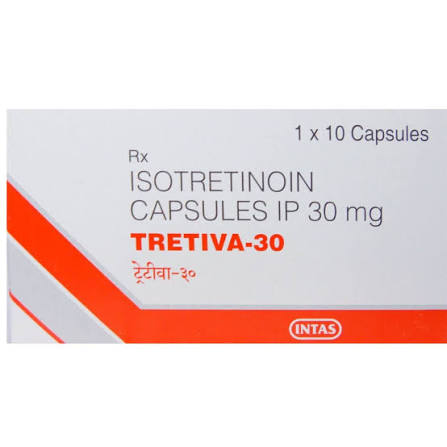
Description
Isotretinoin 30 mg a Day: Why It Isn’t a Capsule Strength in the UK and How the Dose Is Built
People often search for “isotretinoin 30 mg” after being told their daily dose. The confusion is understandable, but it comes from mixing up two different things: a capsule strength and a daily dose. In the UK, oral isotretinoin is supplied as 5 mg, 10 mg, 20 mg and 40 mg capsules. There is no standard 30 mg capsule, so a daily dose of 30 mg is made up from the capsules that do exist.
This guide explains how that works. It is general education and does not replace your specialist’s instructions.
Prescription-only medicine with strict controls. In the UK, oral isotretinoin can only be started by, or under the supervision of, a consultant dermatologist, and is supplied only against a valid prescription. Women who could become pregnant must follow the Pregnancy Prevention Programme.
Capsule Strength vs Daily Dose
| Term | Meaning | Example |
|---|---|---|
| Capsule strength | The amount in one capsule, printed on the pack | 10 mg or 20 mg |
| Daily dose | The total amount you take in a day, which may use more than one capsule | 30 mg a day |
A prescriber chooses a daily dose for your body weight and builds it from the strengths available.
How a 30 mg Daily Dose Is Usually Built
The most common way is one 10 mg capsule plus one 20 mg capsule. Other combinations are possible, such as three 10 mg capsules, or alternating days of different amounts to average out to the target. Your specialist decides what suits you and writes it clearly on your label.
- 10 mg + 20 mg: the usual combination, two capsules a day
- Three 10 mg capsules: sometimes used during dose adjustment
- Different amounts on different days: used occasionally to match a weight-based target
Do not combine strengths yourself, split capsules or swap one strength for another. Capsules must be swallowed whole. Our product pages explain each building block: isotretinoin 10 mg and isotretinoin 20 mg.
Why Doses Are Worked Out by Weight
Isotretinoin is dosed by body weight. Many specialists start around half a milligram per kilogram a day and may increase it, aiming for a total (cumulative) amount across the whole course. As a simple illustration only, someone weighing around 60 kg at the lower end of that range would be on about 30 mg a day. Your own dose depends on your weight, how well you tolerate the medicine and how your skin responds.
That is why two people can both be on isotretinoin but take different daily doses, and why you should never compare your dose with someone else’s. Tell your specialist if your weight changes significantly.
Key Safety Points at Any Dose
- Pregnancy: isotretinoin causes serious birth defects. Anyone who could become pregnant needs a negative pregnancy test before starting, monthly tests during treatment and about five weeks after, and effective contraception from at least one month before until one month after treatment.
- Blood tests: liver enzymes and blood fats are checked before treatment, usually after about a month, and then at intervals.
- Mood: low mood and anxiety have been reported. If you feel persistently low or have thoughts of self-harm, stop the capsules and contact your doctor straight away. In an emergency call 999, or call Samaritans free on 116 123.
- Take with food: a meal or milk helps absorption.
- Avoid: vitamin A supplements, tetracycline-type antibiotics, blood donation during treatment and for a month after, and waxing, laser or peels until about six months after finishing, unless your specialist advises otherwise.
Frequently Asked Questions
Is there a 30 mg isotretinoin capsule in the UK?
Not as a standard strength. UK capsules are 5, 10, 20 and 40 mg. Be cautious of any seller offering a 30 mg capsule, as it may be unlicensed or counterfeit.
How do I take 30 mg a day if there is no 30 mg capsule?
Usually one 10 mg and one 20 mg capsule together, as your label directs.
Is 30 mg a high dose?
It depends on your weight. For some people it is a moderate dose, for others it is low. Your specialist sets it for you.
Can I swap my capsules to get the same total dose?
Not without advice. Capsule combinations are chosen deliberately, and your pharmacist or specialist should approve any change.
Can I buy isotretinoin without a prescription?
No. It must be started by, or under the supervision of, a consultant dermatologist and supplied on a valid prescription.
Where to Read More
See the NHS guide to isotretinoin for acne, the British Association of Dermatologists and the MHRA isotretinoin guidance.
Medical disclaimer: This information is for general education and does not replace advice from a qualified healthcare professional. Always follow your specialist’s instructions and the patient leaflet and card supplied with your medicine.







Reviews
There are no reviews yet.