
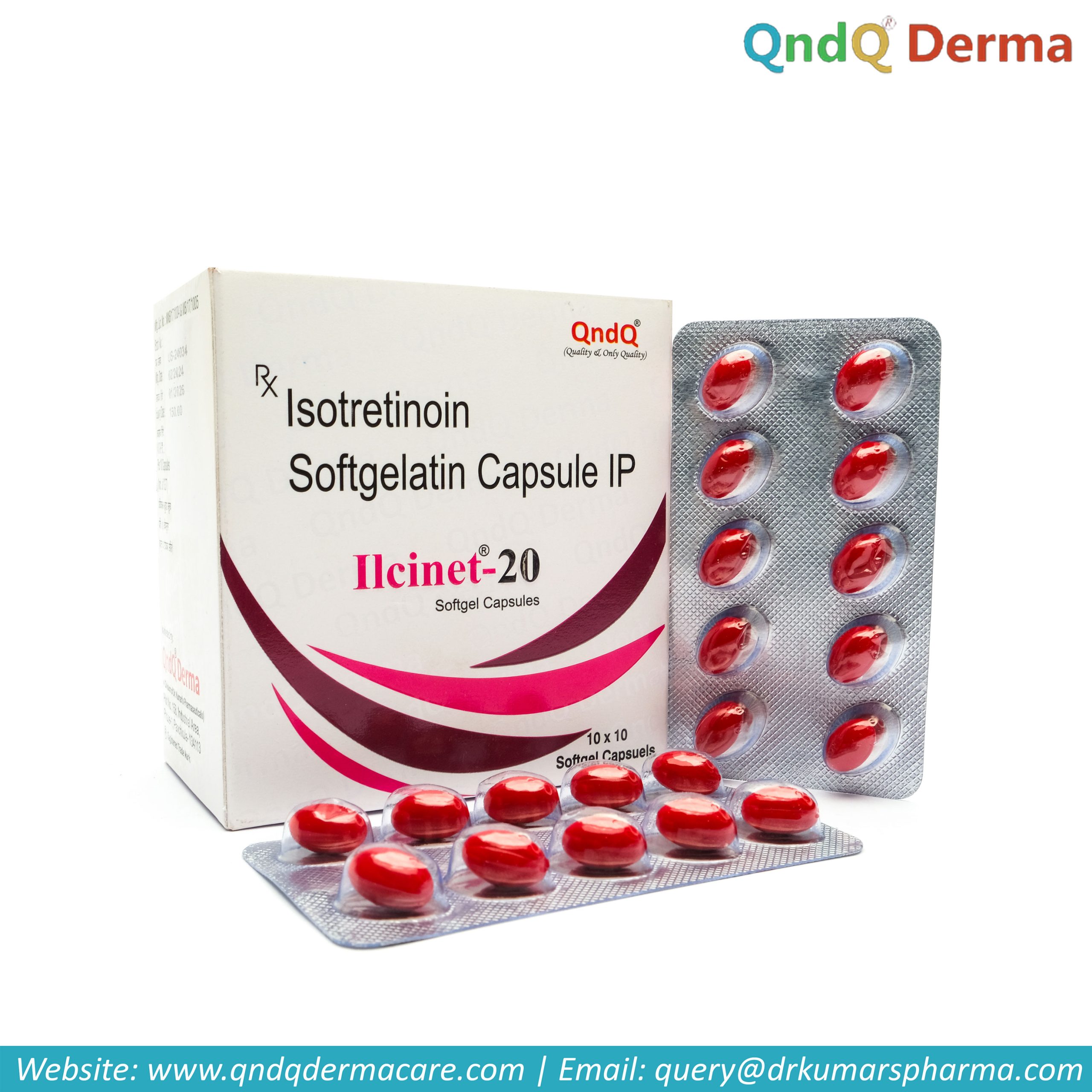
Description
Isotretinoin 20 mg Capsules: Following a Full Course From Middle to End
The 20 mg capsule is a core strength for standard isotretinoin treatment. Once you have settled into the course, your specialist is likely to build most of your daily dose from 20 mg capsules, sometimes with smaller strengths to fine-tune the amount. This page is for people who are already in the middle of treatment, or who want to know how a whole course fits together, from the maintenance phase through to finishing and afterwards.
It is general education and does not replace your specialist’s instructions.
Prescription-only medicine with strict controls. In the UK, oral isotretinoin can only be started by, or under the supervision of, a consultant dermatologist, and is supplied only against a valid prescription. Women who could become pregnant must follow the Pregnancy Prevention Programme. We cannot supply it without a valid prescription.
Isotretinoin 20 mg Quick Facts
| Medicine | Isotretinoin (oral retinoid) |
|---|---|
| Strength | 20 mg per capsule |
| Used for | Severe acne that has not responded to other treatment |
| Typical course | Often 16 to 24 weeks, set by your specialist |
| With food? | Yes, with a meal or milk |
| Pregnancy | Never to be taken during pregnancy |
| Prescription required | Yes |
How the Total Dose Is Planned
Isotretinoin is dosed by body weight. Instead of aiming for a single daily number, many specialists plan a cumulative dose, the total amount you take across the whole course, often in the region of 120 to 150 mg for every kilogram of body weight. The daily dose then depends on how long the course runs and how well you tolerate it.
For example, a heavier person or someone aiming to finish in a set time may need a larger daily dose than someone lighter, which is why the same capsule strength can be used in very different ways. A 20 mg capsule lets your prescriber build the daily dose in sensible steps, for example one capsule on some days and two on others.
Your own plan is calculated by your specialist. Do not compare your dose with anyone else’s.
The Course in Phases
| Phase | What is happening |
|---|---|
| Starting | Baseline tests, pregnancy checks if relevant, and a low initial dose |
| Building | The dose is gradually raised toward your target if you are tolerating it |
| Maintaining | You stay on a steady dose, with regular monitoring |
| Finishing | The course ends once your specialist judges the cumulative dose and skin response are adequate |
| Afterwards | Follow-up, ongoing contraception where needed, and review of any relapse |
If you are earlier in treatment, our isotretinoin 10 mg page covers the first weeks in more detail.
Monitoring Through the Middle of Treatment
Blood tests
Isotretinoin can raise blood fats and liver enzymes. Tests are usually repeated about a month after starting and then at intervals set by your specialist, often every three months. If a result is out of range, your dose may be reduced, held or stopped. Do not skip tests because you feel well.
Pregnancy tests
For anyone who could become pregnant, a pregnancy test is required every month, with the next 30-day prescription issued only after a negative result. A final test is done about five weeks after your last capsule.
Skin and general check-ups
Your specialist will look at how your acne is responding, how you are coping with dryness, and how you are feeling generally, including your mood.
Taking 20 mg Capsules Properly
- Follow your label and take the exact number of capsules prescribed.
- Take with a meal or milk so your body absorbs the medicine well.
- Swallow whole with water; do not chew or open the capsule.
- Take at roughly the same time each day.
- If you miss a dose, take it when you remember with food; if the next dose is nearly due, skip it. Never double up.
Managing Side Effects During the Long Middle Stretch
By mid-course many people have found a routine, but side effects can still build up. Common ones are dry lips, skin and eyes, nosebleeds, muscle and joint aches, headache and sun sensitivity.
- Keep up with lip balm, emollients and sunscreen (SPF 30 or higher) every day.
- Use lubricating eye drops, and take a break from contact lenses if they are uncomfortable.
- If you exercise hard, ease off during any week when your muscles ache.
- Tell your specialist if side effects are hard to cope with. Reducing the dose often helps without ending the course.
Mood Check
Low mood, anxiety and, rarely, thoughts of self-harm have been reported with isotretinoin, although a clear link is not proven and severe acne can itself affect mental health. Let someone close to you know what to watch for during a long course.
If you feel persistently low or agitated or have any thoughts of harming yourself, stop the capsules and contact your doctor straight away. If you are in immediate danger, call 999. Samaritans are free on 116 123.
What to Avoid Throughout the Course
- Vitamin A supplements and high-dose multivitamins
- Tetracycline-type antibiotics, such as doxycycline, lymecycline and minocycline
- Waxing, laser treatment, dermabrasion and chemical peels, until about six months after you stop, unless your specialist says otherwise
- Blood donation, during treatment and for at least one month afterwards
- Excessive alcohol
Serious Symptoms: Get Help Quickly
- Severe headache with vomiting or vision changes
- Yellowing of the skin or eyes, dark urine or severe abdominal pain
- Severe stomach pain, bloody diarrhoea or painful swallowing
- Persistent low mood or thoughts of self-harm
- Widespread rash, blistering or swelling of the face or throat
- Marked thirst or frequent urination
- Sudden loss of vision or poor night vision
Finishing the Course
Your specialist decides when to stop, based on your total dose and how your skin has responded. Some people finish while a few marks remain, because the skin can keep improving for months after the last capsule. Do not stop early because your skin looks clear, unless you are advised to.
- Contraception: continue effective contraception for one month after the last capsule if you could become pregnant, and attend your final pregnancy test.
- Blood donation: wait at least one month.
- Skin: keep up moisturiser and sunscreen as your skin recovers.
After Treatment: Relapse and Scars
Many people stay clear after a single course, but some have acne return, usually within the first year or two. If that happens, speak to your specialist. A second course is sometimes offered, depending on your situation and how the first course went.
If acne has left scars, ask about treatment options. Procedures such as laser or chemical peels are normally delayed for about six months after finishing isotretinoin, to let the skin recover.
Who Isotretinoin Is Not Suitable For
- Anyone who is pregnant or breastfeeding, or who cannot follow the Pregnancy Prevention Programme
- People with significant liver disease or very high blood fats
- People taking vitamin A supplements or tetracycline antibiotics, unless advised by a specialist
- Anyone allergic to isotretinoin, or to ingredients such as soya or peanut (check the leaflet)
How 20 mg Compares With Other Strengths
| Strength | Typical role |
|---|---|
| 5 mg | Fine adjustment and low-dose plans |
| 10 mg | Starting treatment and building the dose |
| 20 mg | Core strength for full-course daily doses |
| 40 mg | Higher weight-based doses with fewer capsules |
Your prescriber chooses the combination. Never change strengths yourself.
Storage
- Keep in the original pack at room temperature, away from light and damp.
- Keep out of reach of children.
- Return unused capsules to a pharmacy; never share them.
Frequently Asked Questions
How long does a full course last?
Often 16 to 24 weeks, but it depends on your weight, your daily dose and how your skin responds.
What is a cumulative dose?
The total amount of isotretinoin taken across a whole course, usually calculated per kilogram of body weight.
Will my acne come back?
It can, particularly in the first year or two. Tell your specialist if it does, since a further course or other treatment may be possible.
Can I drink alcohol on isotretinoin?
It is best to avoid excess alcohol, as it can affect your liver and blood fats.
Do I still need contraception after my last capsule?
Yes. If you could become pregnant, continue effective contraception for one month after the last dose.
When can I have waxing or laser treatment?
Usually not until around six months after finishing, unless your specialist advises differently.
Can I buy isotretinoin without seeing a dermatologist?
No. It must be started by, or under the supervision of, a consultant dermatologist and supplied on a valid prescription.
Where to Read More
See the NHS guide to isotretinoin for acne, the British Association of Dermatologists and the MHRA isotretinoin guidance.
Medical disclaimer: This information is for general education and does not replace advice from a qualified healthcare professional. Always follow your specialist’s instructions and the patient leaflet and card supplied with your medicine.








Reviews
There are no reviews yet.