
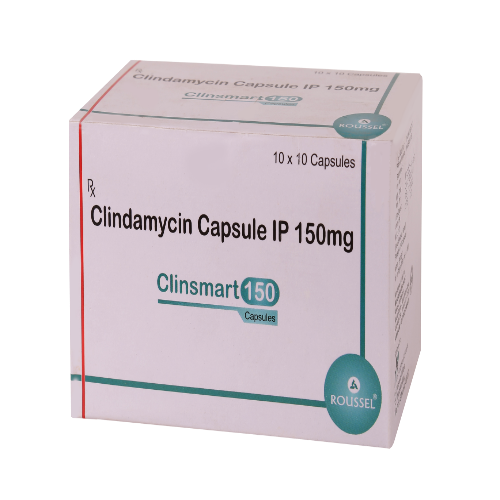
Description
Clindamycin 150 mg Capsules: What They Treat, and the Diarrhoea Warning You Should Know About
Clindamycin is an antibiotic from the lincosamide family. It is a common choice for tooth and gum infections, skin and soft-tissue infections, and for people who cannot take penicillin. The 150 mg capsule is the lower of the two standard capsule strengths and is often used for milder infections or when a prescriber builds a dose around several capsules.
Clindamycin works very well against the right bacteria, but it carries one safety point that every patient should understand before the first capsule: a higher-than-average risk of a serious bowel infection called Clostridioides difficile. This guide covers that first, then uses, how to take the capsules, and what to expect. It is general education and does not replace your prescriber’s instructions.
Prescription medicine. Clindamycin 150 mg is dispensed only against a valid prescription from a licensed clinician. We cannot supply it without one.
Clindamycin 150 mg at a Glance
| Medicine | Clindamycin (lincosamide antibiotic) |
|---|---|
| Strength | 150 mg per capsule |
| Treats | Susceptible bacterial infections; not viruses |
| Usual routine | Several times a day; your label sets the exact schedule |
| With food? | Can be taken with or without food, always with a full glass of water |
| Key warning | Severe diarrhoea can signal C. difficile infection |
| Prescription required | Yes |
The Most Important Warning: Severe Diarrhoea and C. difficile
All antibiotics can disturb the balance of bacteria in the gut, but clindamycin is among those most linked to C. difficile overgrowth. This bacterium produces toxins that inflame the bowel. It can develop during treatment or up to several weeks afterwards.
Signs to act on
- Watery diarrhoea several times a day, especially if it is severe or does not settle
- Blood or mucus in the stool
- Stomach cramps or swelling
- Fever
- Feeling unwell, dehydrated or weak
What to do
- Contact a doctor promptly, and do not wait until the course ends.
- Do not take anti-diarrhoea medicines such as loperamide unless a clinician tells you to. They can trap the toxins in the bowel.
- Drink plenty of fluids while you wait to be seen.
- Wash hands with soap and water, because alcohol gel does not kill the spores that cause the infection.
Mild loose stools are common with antibiotics and do not usually mean C. difficile. The difference is severity, duration and whether blood or fever are present. If in doubt, ask.
For background, see the CDC’s C. difficile information.
What Clindamycin 150 mg Is Prescribed For
- Dental infections: tooth abscesses and gum infections, often when penicillin is unsuitable
- Skin and soft-tissue infections: infected wounds, cellulitis and some boils or abscesses, including cases involving resistant Staphylococcus
- Respiratory infections: some chest infections where the likely bacteria respond to it
- Bone, joint and deeper infections: usually at higher doses and under specialist guidance
- Acne: clindamycin is also used on the skin as a topical treatment; the capsule is a different product
- Preventive use: in certain settings, such as before some dental or surgical procedures in people with penicillin allergy, as directed by a clinician
It does not work against colds, flu or most sore throats, which are usually viral.
Why a 150 mg Capsule?
The 150 mg strength lets prescribers match the dose to the infection and the patient. A milder infection might call for one capsule at a time, while a larger dose can be built with two. Smaller capsules can also be easier to swallow. If your prescriber needs a different build, they may choose the 300 mg strength instead; see our clindamycin 300 mg page for how that differs.
How to Take Clindamycin Capsules Safely
- Follow your label. Note how many capsules, how many times a day and for how many days.
- Swallow capsules whole with a full glass of water. This matters. If a capsule stays in the food pipe, it can irritate or injure the lining. Stay upright for at least 30 minutes afterwards and do not take it just before lying down.
- Space doses evenly. Doses are usually spread through the day, for example every 6 to 8 hours as directed.
- Food is optional. A light meal can help if the capsules upset your stomach.
- Finish the course unless a clinician tells you to stop, for example because of severe diarrhoea.
If you miss a dose
Take it as soon as you remember. If it is nearly time for the next dose, skip the missed one. Never take two doses together.
What to Expect
- Within 24 to 48 hours: pain, swelling and fever from a bacterial infection often begin to ease.
- By day 3: most people notice clear improvement.
- No better, or worse? Contact your prescriber. For a dental infection that is spreading, with facial swelling, trouble swallowing or fever, seek urgent care.
- After the course: remain alert for diarrhoea for several weeks.
Other Side Effects
Common
- Nausea, vomiting or stomach pain
- Mild loose stools
- Metallic or unusual taste
- Mild rash
Seek medical advice promptly
- Severe, watery or bloody diarrhoea (see above)
- Hives, swelling of the face or throat, wheezing or trouble breathing (an emergency)
- Widespread rash, blistering or peeling skin
- Yellowing of the skin or eyes, dark urine or severe tiredness
- Painful or difficult swallowing, or chest pain after taking a capsule
- Unusual bruising, bleeding or frequent infections
Medicines to Mention Before Starting
| Medicine | Why it matters |
|---|---|
| Muscle relaxants used in anaesthesia | Clindamycin can increase their effect; tell the surgical team |
| Erythromycin and other macrolides | May work against each other; usually not combined |
| Warfarin and other blood thinners | Bleeding risk may change; monitoring may be needed |
| Rifampicin | May lower clindamycin levels |
| Strong CYP3A4 inhibitors or inducers | May change clindamycin levels |
Always give your prescriber and pharmacist a full list of everything you take, including supplements and herbal remedies.
Who Needs Extra Care
- People with a history of colitis or bowel inflammation, or of C. difficile, who may need a different antibiotic
- People with liver or kidney disease, where the dose may need adjusting
- People with myasthenia gravis, since muscle weakness can worsen
- Anyone with a past allergy to clindamycin or lincomycin
- Pregnancy and breastfeeding: clindamycin is sometimes used when needed, but only on a prescriber’s advice. Small amounts pass into breast milk, so watch the baby for loose stools and tell a clinician if you notice any.
- Older adults, who are more prone to severe diarrhoea
Clindamycin and Alcohol
Alcohol does not stop clindamycin from working. It can, though, worsen nausea and stomach upset and slow recovery, so many people avoid it during a course.
Clindamycin vs Amoxicillin and Azithromycin
| Antibiotic | Family | Main contrast with clindamycin |
|---|---|---|
| Amoxicillin | Penicillin | First choice for many infections; not for penicillin allergy; lower C. diff risk |
| Azithromycin | Macrolide | Short courses; different heart-rhythm cautions |
| Clarithromycin | Macrolide | Twice daily; many drug interactions |
These are not interchangeable. Your prescriber chooses based on the likely bacteria, your allergies and local resistance patterns.
Using Antibiotics Responsibly
Because clindamycin carries a higher C. difficile risk, prescribers use it deliberately rather than as a default. Help by not requesting antibiotics for viral illnesses, never sharing or saving capsules, and completing the course you were given.
Storage
- Keep in the original pack, at room temperature, away from damp and heat.
- Keep out of reach of children.
- Do not use after the expiry date, and return leftovers to a pharmacy.
Frequently Asked Questions
How long does clindamycin 150 mg take to work?
Many people feel better within two to three days. Contact your prescriber if you feel worse or see no change.
Is clindamycin good for tooth infections?
It is commonly prescribed for dental infections, particularly when penicillin cannot be used. A dentist should still treat the cause, such as an abscess, because antibiotics alone do not always fix it.
Why do I need a full glass of water?
To make sure the capsule reaches the stomach and does not irritate the food pipe.
Can I take clindamycin with food?
Yes. Food is optional, and it may reduce stomach upset.
What should I do if I get diarrhoea?
Mild loose stools are common. If it is severe, watery or bloody, or comes with fever or cramps, contact a doctor and avoid anti-diarrhoea medicines.
Can I drink alcohol on clindamycin?
It does not block the antibiotic, but it is best limited during illness and treatment.
Is clindamycin the same as clindamycin gel?
No. The gel or lotion is a topical medicine for acne or skin conditions. The capsule is taken by mouth for infections.
Can I use leftover capsules next time?
No. Never reuse antibiotics. Return leftovers to a pharmacy.
Where to Read More
See the NHS clindamycin guide, the MedlinePlus clindamycin entry and the CDC antibiotic use pages.
Medical disclaimer: This information is for general education and does not replace advice from a qualified healthcare professional. Always follow your prescriber’s instructions and the leaflet supplied with your medicine.







Reviews
There are no reviews yet.