
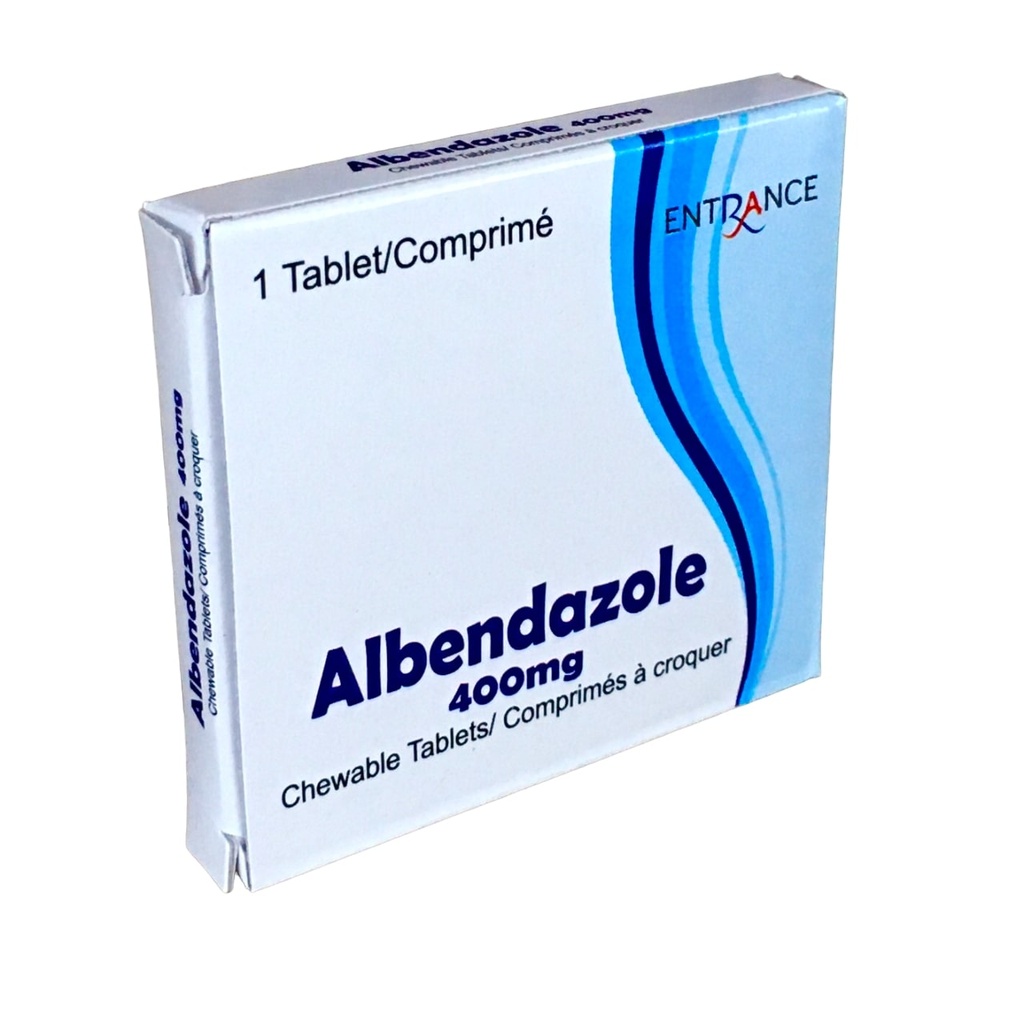
Description
Albendazole 400 mg Tablets: Which Worm Infections They Treat and How to Use Them Safely
Albendazole is an anthelmintic, a medicine that kills parasitic worms. The 400 mg tablet is the standard adult size and is used for a range of intestinal worm infections and, under specialist care, some more serious parasitic conditions. Many people first meet albendazole after finding threadworms in a child, after travelling, or after a diagnosis from a doctor.
This guide explains what albendazole 400 mg treats, how a single-dose course differs from a long one, what to do about the rest of the household, and the safety points that matter most. It is general education and does not replace your prescriber’s instructions.
Prescription medicine. Albendazole 400 mg is dispensed only against a valid prescription from a licensed clinician. We cannot supply it without one.
Albendazole 400 mg Quick Facts
| Medicine | Albendazole (benzimidazole anthelmintic) |
|---|---|
| Strength | 400 mg per tablet |
| Treats | Certain worm and tapeworm infections |
| Course length | From a single dose to several weeks, depending on the infection |
| With food? | Often taken with a meal; a fatty meal is advised for infections outside the gut |
| Not for use in | Pregnancy (see below) |
| Prescription required | Yes |
The Infections Albendazole Is Used For
Intestinal worms
These are the most common reasons for a prescription, and they are usually treated with a short course.
- Threadworm (pinworm): small white worms around the bottom, causing night-time itching
- Roundworm (Ascaris)
- Hookworm
- Whipworm (Trichuris)
- Strongyloides in some cases, often with specialist advice
Tissue and tapeworm infections
These are more serious, need a diagnosis from a doctor, and usually involve a longer course with blood tests.
- Neurocysticercosis: larval pork tapeworm cysts in the brain or nervous system
- Hydatid disease: cysts, most often in the liver or lungs, caused by a dog tapeworm
These conditions are treated under specialist supervision. Do not try to self-treat them.
Single Dose or Long Course?
| Situation | What it usually looks like |
|---|---|
| Most intestinal worms | One 400 mg tablet as a single dose; sometimes repeated after about two weeks |
| Threadworm | Often a single dose, repeated after two weeks to catch newly hatched worms |
| Strongyloides and some others | A short multi-day course, as your clinician decides |
| Hydatid disease and neurocysticercosis | Weeks of treatment, often in cycles, with liver and blood tests |
The pattern above is only a general outline. Your dose and schedule are set by your prescriber and printed on your label.
Treating the Whole Household
Threadworms in particular spread easily between family members. Clinicians often advise treating everyone in the household at the same time, even those without symptoms. Hygiene steps help prevent re-infection:
- Wash hands with soap after using the toilet and before eating or preparing food.
- Keep fingernails short and discourage nail-biting and scratching.
- Wash bedding, nightwear and towels on a hot wash on the day of treatment.
- Vacuum and damp-dust bedrooms, and wipe down surfaces.
- Wash the bottom and hands first thing in the morning, when eggs are most likely to be present.
For travel-related infections, wash fruit and vegetables well, drink safe water and avoid walking barefoot on soil in areas where hookworm is common.
How to Take Albendazole Tablets
- Take exactly as the label says, with a glass of water.
- Taking it with food can help absorption. For infections outside the gut, such as cysts in the liver or brain, a meal that contains some fat improves how much medicine enters the blood.
- Tablets can be swallowed whole or, if swallowing is hard, chewed or crushed and taken with water, unless your label says otherwise.
- For longer courses, take the doses at about the same times each day and keep your blood-test appointments.
Missed dose
Take it as soon as you remember unless it is nearly time for the next dose. Do not take a double dose.
Pregnancy and Contraception
This is the most important safety point on this page. Albendazole can harm an unborn baby, and it is generally not used during pregnancy, particularly in the first trimester.
- Tell your prescriber if you are pregnant, think you might be, or are trying to conceive.
- If you could become pregnant, your clinician may ask for a pregnancy test before treatment.
- Reliable contraception is usually advised during treatment and for a period afterwards, often about a month. Check your own leaflet for the exact time.
- Talk to a clinician about breastfeeding before taking it, as small amounts may pass into milk.
Side Effects
Common
- Headache
- Nausea, vomiting or stomach pain
- Dizziness
- Raised liver enzymes on blood tests (usually without symptoms)
Less common
- Fever
- Temporary hair thinning, mostly with longer courses
- Tiredness
Seek medical advice promptly
- Yellowing of the skin or eyes, dark urine or severe stomach pain, which may signal liver problems
- Unexplained fever, sore throat, unusual bruising or bleeding, or frequent infections, which can point to a drop in blood cell counts
- Rash, swelling or difficulty breathing (an allergic reaction)
- Severe headache, seizures or confusion, particularly if you are being treated for neurocysticercosis
Blood Tests During Longer Courses
For courses lasting more than a few days, doctors usually check liver function and blood counts before starting and at intervals during treatment. These tests are routine and help catch rare problems early. Keep every appointment, and report symptoms rather than waiting for the next test.
Medicines That Can Interact With Albendazole
| Medicine | Effect |
|---|---|
| Cimetidine | May raise albendazole levels |
| Dexamethasone | May raise levels; also used alongside treatment in some brain infections |
| Praziquantel | May raise levels |
| Carbamazepine, phenytoin, phenobarbital | May lower levels and reduce effect |
| Ritonavir | May lower levels |
| Theophylline | Levels may need monitoring |
Grapefruit juice can also affect how the medicine is processed. Tell your pharmacist about everything you take, including supplements.
Who Needs Extra Care
- People with liver disease, who may need closer monitoring or a different plan
- People with blood disorders or low blood counts
- People with kidney disease, depending on the infection
- Children: dosing depends on age and the infection, and very young children are treated only on a clinician’s advice
- Anyone with a past allergy to albendazole or similar medicines
Albendazole and Alcohol
Alcohol does not cancel albendazole, but the medicine is processed by the liver, and alcohol adds to that workload. For short single doses, occasional moderate drinking is a lower concern, but it is wise to avoid alcohol during longer courses or if you have liver problems.
Albendazole vs Mebendazole
These two medicines belong to the same family and treat many of the same worms. Albendazole is also used for certain tissue infections, such as hydatid disease and neurocysticercosis, whereas mebendazole is mainly used for intestinal worms. Your prescriber chooses between them based on the infection and local guidance.
What to Expect After Treatment
- Within a few days: itching and discomfort from intestinal worms often settle.
- You may see dead worms in stools: this is normal and not a cause for alarm.
- After two weeks: a repeat dose may be advised for threadworm.
- If symptoms return: contact your prescriber. Re-infection from the household or environment is common.
Storage
- Keep in the original pack, at room temperature, away from damp and heat.
- Keep out of reach of children.
- Do not use after the expiry date, and return unused tablets to a pharmacy.
Frequently Asked Questions
How long does albendazole take to work?
The medicine starts killing worms soon after the dose, and symptoms such as itching often ease within days. Tissue infections take much longer to resolve and are monitored by a specialist.
Do I need to take it with food?
Food is not essential for many intestinal worms, but a meal with some fat helps absorption and is advised for infections outside the gut.
Can I take albendazole during pregnancy?
It is generally avoided in pregnancy. Tell your prescriber if you are or might be pregnant before taking it.
Should my family be treated too?
For threadworm, often yes. Your clinician or pharmacist can advise who should be treated.
Can I drink alcohol on albendazole?
For a single dose, occasional moderate drinking is a lesser concern, but avoid it during longer courses or if you have liver issues.
Why is a second dose needed two weeks later?
The tablet kills adult worms but may not destroy eggs that hatch later. A repeat dose clears newly hatched worms.
Is albendazole safe for children?
It is used in children, with dosing based on age and the infection. Never give an adult tablet to a child without a clinician’s direction.
When should I get urgent help?
Seek emergency help for swelling of the face or throat, difficulty breathing, seizures, severe confusion, or a spreading blistering rash.
Where to Read More
See the CDC parasites information pages, the WHO fact sheet on soil-transmitted worm infections and the MedlinePlus albendazole entry.
Medical disclaimer: This information is for general education and does not replace advice from a qualified healthcare professional. Always follow your prescriber’s instructions and the leaflet supplied with your medicine.








Reviews
There are no reviews yet.