
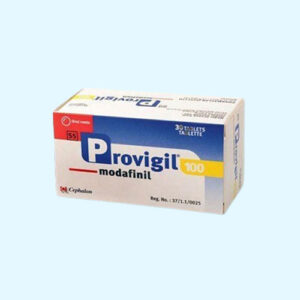
Description
What Is Provigil 100 mg Used For
Provigil 100 mg (modafinil) is a drug that is prescribed to enhance wakefulness in patients with excessive daytime sleepiness due to narcolepsy, obstructive sleep apnea (OSA), and shift work sleep disorder (SWSD). It functions by acting on neurotransmitters in the brain, enhancing alertness and concentration. It is also sometimes prescribed off-label for ADHD, depression-related tiredness, and cognitive enhancement among professionals or students. In comparison to other older stimulants, Provigil is less addictive and has fewer side effects. Provigil is most often prescribed at lower doses (100 mg) for the initial or mild cases or as an initial dose before escalating to 200 mg a day.
How Does Provigil 100 mg Work?
The exact action of Provigil is unknown, but scientists think it can operate by enhancing the level of dopamine and other neurotransmitters in the brain that are responsible for maintaining wakefulness and alertness.
- Dopamine Reuptake Block: Provigil inhibits dopamine transporters, releasing more dopamine into the brain. This enhances wakefulness and concentration.
- Histamine and Orexin Activation: It also impacts histamine and orexin levels, which are responsible for sleep-wake cycles. By enhancing their activity, Provigil keeps the user awake for a longer time.
- Regulation of glutamate and GABA: The substance enhances the discharge of glutamate (an energizing neurotransmitter) while limiting GABA (a relaxing neurotransmitter), producing increased mental clarity.
In contrast to other stimulants such as Adderall, Provigil is less likely to be addictive and dependent, so it’s often the first choice for extended treatment of sleep disorders.
How Long Does Provigil 100 mg Stay in Your System?
- Half-Life: Provigil has a variable half-life of approximately 12 to 15 hours, i.e., it takes 12 / 15 hours for half of the drug to be eliminated from the body.
- Detection in Blood: 10 to 12 hours
- Detection in Urine: Up to 30 hours
- Saliva Detection: Up to 20 hours
Provigil is primarily metabolized by the liver and removed from the body by the urine. Age, metabolism, liver function, and dosage may influence how long it remains in the body.
Side Effects of Provigil 100 mg
Although Provigil is usually well tolerated, it can be associated with side effects, particularly at increased doses.
Common Side Effects:
- Headache
- Nausea
- Dizziness
- Nervousness
- Difficulty sleeping (insomnia)
- Dry mouth
Less Common but Serious Side Effects:
- Rapid heart rate (tachycardia)
- Elevated blood pressure
- Severe allergic reaction (skin rash, swelling, trouble breathing)
- Anxiety or restlessness
- Hallucinations or changes in mood
In the event of severe side effects, immediately consult with a medical doctor.
Precautions Before Taking Provigil 100 mg
Before taking Provigil, take note of the following precautions:
- Medical Conditions:
If you suffer from heart ailments, hypertension, or liver conditions, consult a physician prior to taking Provigil.
Individuals with past mental illness (e.g., psychosis, bipolar disorder) need to exercise care since it causes mood swings.
- Pregnancy and Breastfeeding:
Pregnant women must steer clear of Provigil except on doctor’s orders.
Provigil may pass into breast milk, but mothers taking the drug should consult a physician first.
- Alcohol & Drug Use:
Merging Provigil with alcohol or other illegal drugs may enhance side effects such as dizziness, confusion, and dehydration.
- Driving & Operating Machinery:
Provigil may lead to dizziness and impaired vision, and thus refrain from driving or operating machinery until you understand its effect.
Drug Interactions with Provigil 100 mg
Provigil also interacts with several medications, either reducing or enhancing its efficacy or causing harmful side effects.
Drugs That Can Interact with Provigil:
- Birth Control Pills – Provigil can decrease the efficacy of hormone-based contraceptives, causing an increased risk of pregnancy.
- Antidepressants (SSRIs & MAOIs) – Can enhance the risk of serotonin syndrome (a serious condition with excessive fever, confusion, and seizures).
- Blood Pressure Medications – Provigil can increase blood pressure, lowering the efficacy of such medications.
- Caffeine & Other Stimulants – The combination of Provigil with caffeine or stimulants (such as Adderall, and Ritalin) will enhance anxiety, insomnia, and heart rate.
- Anticoagulants (Blood Thinners) – Provigil can interfere with how warfarin and other blood thinners function, elevating the risk of bleeding.







13 reviews for Generic Provigil 100 mg
There are no reviews yet.