

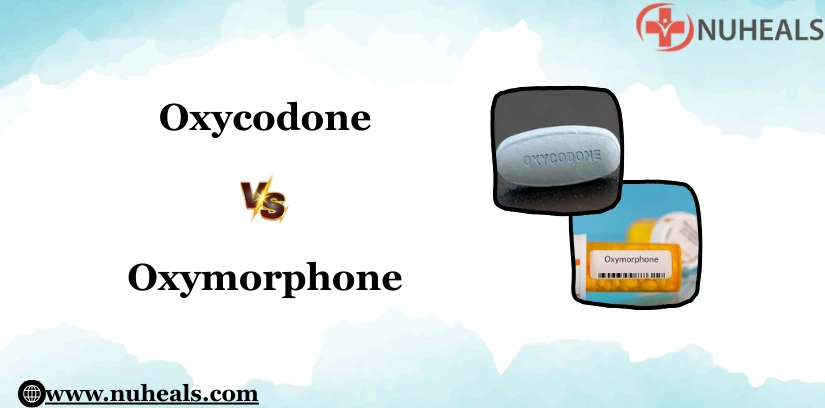
Uncountable people all over the world every day face the struggle in serious pain. The pain has many kinds of strength to stop a person from out off track, which requires fast attention for pain. So people started comparing the comparison between Oxycodone vs Oxymorphone on a quick basis. When taking these prescription painkillers, one has the strength to transform a person’s life and bring it to a sudden stop. Choosing one of them requires being aware of these drugs. So, without further delay, let us explore these two drugs’ differences, similarities, side effects, and many more things.
Know Key Detail: Oxycodone vs Oxymorphone Drug
The key details of some pain-relieving drugs that can provide short-term relief rarely offer a deep and calm relief from serious pain. That’s why people prefer stronger pain medications like Oxymorphone and Oxycodone. Both have the function of binding to the opioid receptor in the brain and spinal cord. Here, you can know what Oxycodone is and what Oxymorphone is.
What are Oxycodone Pills?
The Oxycodone tablet is a prescribed drug that is used to treat common or serious pain in adults. Oxycodone comes in three different forms, which are tablets, capsules, and solution. The oxy tablet and capsules are available in comes in immediate release (IR) and extended release (ER) forms. The IR forms belong to the blood when you take it, and ER moves through the bloodstream. Basically, it can overcome the strength of pain by making the brain feel that you are facing.
What is an Oxymorphone Pill?
The Oxymorphone drug is an opioid pain relief medicine, which is used to treat less common to very serious pain. It also comes in an immediate-release and an extended-release form, as well as an oral solution. The ER form is used for someone who has serious pain, and the IR form for moderate pain.
What are the Difference Between Oxycodone and Oxymorphone?
Here, let’s know the common difference between Oxymorphone versus Oxycodone in detail. Between these two drugs, the crucial difference that variety in their source, which controls their classification. Oxymorphone has come about naturally, that is alkaloid or an opiate. In difference Oxycodone capsule, which is classified as a semi-synthetic opioid, meaning it is made in a lab and has been modified in chemical structure. And it is a natural phenomenon that occurs in plants, which is known as thebaine.
Here, in the table below, know the differences:
| Feature | Oxycodone | Oxymorphone |
|---|---|---|
| Half-life | In the IR form, 3 to 5 hours & ER approximately 4.5 hours. | In the IR form, 7 to 10 hours & ER form, 9 and 13 hours. |
| Onset | 10 to 30 minutes | 5 to 10 minutes |
| Drug Class | Opioid analgesic | Opiate agonist |
| Use | Manage moderate to severe pain | Used for common to serious pain |
| Pros | It can relieve conditions such as severe acute postoperative pain | Clinical effectiveness as a strong pain reliever and specific pharmacokinetic properties |
| Cons | It can cause risks like life-threatening respiratory depression. | High potential for addiction, severe respiratory depression |
Similarities of Oxycodone and Oxymorphone
Oxycodone Oxymorphone are in terms of medicine, and both are quite different, but they contain some significant similarities. Usually, because Oxymorphone pills are an active form of Oxycodone, that’s why they have some similar things. As usual, both choose the same opioid receptors in the brain and spinal cord and contain the semi-synthetic opioid analgesics for the treatment of pain. To change pain, they mainly activate the central nervous system’s opioid receptors. They are also similar in terms of side effects, which are described.
What are the Side Effects?
Oxycodone versus Oxymorphone pain relievers have the same kind of side effects, which may not be serious. But Oxymorphone use for a long time can cause fever and confusion, which is higher than that of Oxycodone. Here in below points that mention their common side effects that show in you. Seek your doctor if any side effects have occurred in you.
- Dizziness
- Drowsiness
- Itching
- Headache
- Constipation
- Vomiting
- Nausea
- Dry mouth
- Stomach pain
- Mood changes
Is Oxymorphone Stronger than Oxycodone?
In comparison between these two opioid drugs, Oxymorphone is stronger than Oxycodone. Oxymorphone is used to relieve pain to an extreme level. The rate of Oxymorphone is around 8 to 30 times more potent than Oxycodone whenever it compare at their effects. The comparable strength of these two depends on the root of the administration, but Oxymorphone normally shows higher potency. And remember one thing, choosing one of them needs to be discussed with your healthcare provider to get better results.
Warnings and Precautions
Oxycodone and Oxymorphone for pain after taking any one of these, it is necessary to follow the Warnings and Precautions. It is crucial to follow safety guidelines that draw attention to possible risks. While precautions highlight minor risks, warnings highlight more serious ones. In addition to overdose and abuse, there are dangers that are linked with both drugs. Respiratory depression can be deadly when it begins during the treatment after increasing the dosage. If you take these medicines accidentally, there is a risk. It can also be dangerous during pregnancy. Avoid mixing these drugs and operating them under certain situations, and consult a doctor.
Frequently Asked Questions (FAQs)
Which is Better, Oxycodone or Oxymorphone?
Choosing which is better depends on the individual’s uses, but in certain cases, neither Oxycodone nor Oxymorphone is better. But rather their suitability is totally dependent on the particular medical requirements and response of each patient. Both are treating in same type of situation, while Oxymorphone has a higher level of potency.
Is Oxycodone More Addictive than Oxymorphone?
To know that the addictive Oxymorphone is more potent than Oxycodone, so due to this reason, Oxymorphone is thought to have a high level of potential and abuse and addiction. But both Oxycodone and Oxymorphone are Schedule II restricted substances, which have a high level of misuse and cause addiction in physical dependency. Nonetheless, research contrasting the two has revealed a number of significant distinctions.
Conclusion
In conclusion, research has shown that at equianalgesic dosages, Oxycodone and Oxymorphone have comparable analgesic efficacy and side effect profiles. When both are at the same level, Oxymorphone is usually more powerful than Oxycodone, and some difference in terms of results. In the enzyme, the urine drug that shows in the Oxycodone is for treating one person with a positive result. In spite of the fact that it is regarded as a minor metabolite of Oxycodone. Here you can speak with your physician for the best possible result for pain.